From Pie Tin to Playground: How College Kids and Leftover Packaging Created America's Backyard Obsession
The Accidental Flight Pattern
Walk through any American park on a summer afternoon and you'll see it: families, friends, and strangers locked in the timeless dance of tossing a plastic disc back and forth. The Frisbee has become so embedded in American culture that it's hard to imagine outdoor recreation without it. Yet this billion-dollar pastime began with something most people would throw away — empty pie tins from a Connecticut bakery.
The year was 1871 when William Russell Frisbie opened his pie company in Bridgeport, Connecticut. The Frisbie Pie Company became a local institution, selling thousands of pies to nearby Yale University and the surrounding community. But it wasn't the pies that would make history — it was what happened to the tins afterward.
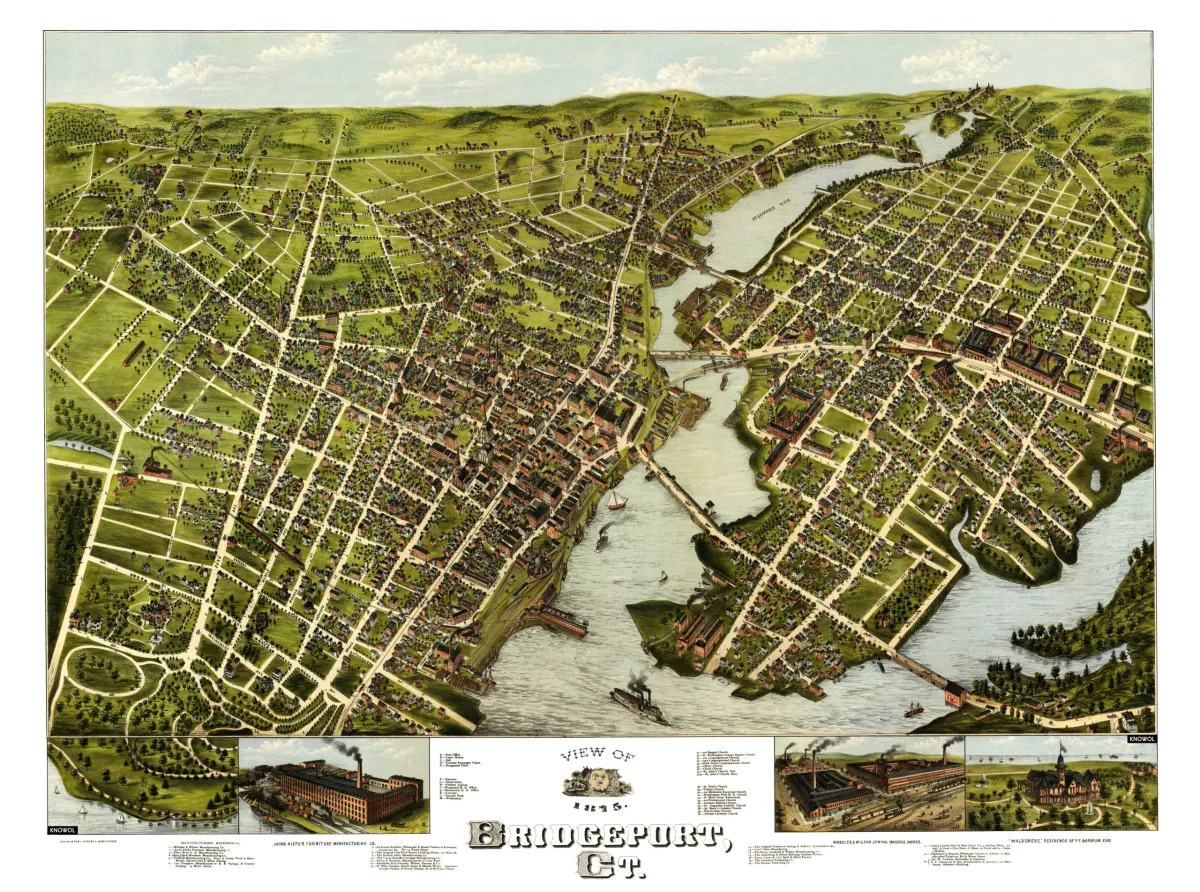 Photo: Bridgeport, Connecticut, via www.knowol.com
 Photo: Yale University, via wallpapers.com
When Trash Became Treasure
By the 1940s, Yale students had discovered something peculiar about those empty Frisbie pie tins. The lightweight metal plates, when thrown with the right technique, could glide through the air with remarkable stability. What started as a few students goofing around between classes quickly spread across campus. The cry of "Frisbie!" became a warning shout, alerting anyone in the flight path that a spinning tin was headed their way.
The phenomenon wasn't limited to college campuses. Workers at the Frisbie Pie Company factory had been casually tossing the tins during breaks for years. Local kids discovered the same aerodynamic properties, turning discarded packaging into impromptu entertainment. But it remained a regional quirk — until a California entrepreneur noticed something the East Coast had overlooked.
The West Coast Transformation
In 1955, Walter "Fred" Morrison was demonstrating his own flying disc invention — a plastic version he called the "Flying Saucer" — on California beaches. Morrison had been experimenting with aerodynamic discs since the 1940s, initially inspired by cake pans he and his girlfriend (later wife) tossed on beaches. His plastic version flew better than metal and didn't rust, but it lacked the cultural momentum that the East Coast pie tin phenomenon had generated.
Everything changed when Rich Knerr and Arthur "Spud" Melin, the founders of Wham-O toy company, discovered Morrison's invention. The duo had already found success with the Hula Hoop and were looking for their next big hit. They bought Morrison's design and began mass production, but they needed the right name.
The Spelling That Built an Empire
When Knerr and Melin learned about the Yale tradition and the Frisbie Pie Company connection, they saw marketing gold. However, to avoid trademark issues, they slightly altered the spelling to "Frisbee" and trademarked their version in 1958. This small change transformed a regional college pastime into a national phenomenon.
The timing was perfect. Post-war America was discovering suburban leisure, and families were spending more time in backyards and parks. The Frisbee arrived just as Americans were learning how to relax outdoors. Unlike baseball or football, it required no special field, no teams, and minimal skill to start playing. Anyone could pick it up and throw it.
Redefining American Leisure
What happened next surprised even Wham-O. The Frisbee didn't just become a toy — it became a cultural touchstone. By the 1960s, it had spawned organized sports like Ultimate Frisbee and disc golf. College campuses embraced it as the perfect counterculture activity: non-competitive, accessible, and vaguely rebellious in its simplicity.
The numbers tell the story. Wham-O has sold more than 300 million Frisbees since 1958, making it one of the best-selling toys in American history. The broader flying disc industry now generates over $1 billion annually, supporting everything from professional disc golf tours to Olympic-recognized Ultimate Frisbee leagues.
The Deeper Impact
But the Frisbee's real legacy lies in what it revealed about American leisure culture. Before the 1950s, outdoor recreation was largely structured around formal sports or organized activities. The Frisbee introduced something different: unstructured, impromptu play that could happen anywhere.
It arrived at a moment when Americans were learning to live in suburbs, discovering what to do with newfound leisure time and open spaces. The Frisbee provided an answer that required no membership fees, no special equipment beyond the disc itself, and no rules beyond "catch it and throw it back."
From Waste to Wonder
Today, as you watch families playing Frisbee in parks across America, remember that you're witnessing the evolution of literal trash into cultural treasure. The Frisbie Pie Company closed in 1958 — the same year Wham-O launched the Frisbee — but its accidental contribution to American leisure culture lives on.
The story reveals something profound about innovation: sometimes the most transformative ideas come not from deliberate invention, but from people finding unexpected uses for everyday objects. A pie tin became a flying disc, a flying disc became a pastime, and a pastime became a billion-dollar industry that redefined how Americans play.
In a culture obsessed with high-tech entertainment, there's something beautifully simple about the Frisbee's enduring appeal. It proves that sometimes the best innovations are hiding in plain sight — or in this case, in yesterday's trash.