The Plastic Ring That Fitness Experts Called Ridiculous — Until It Revolutionized Exercise
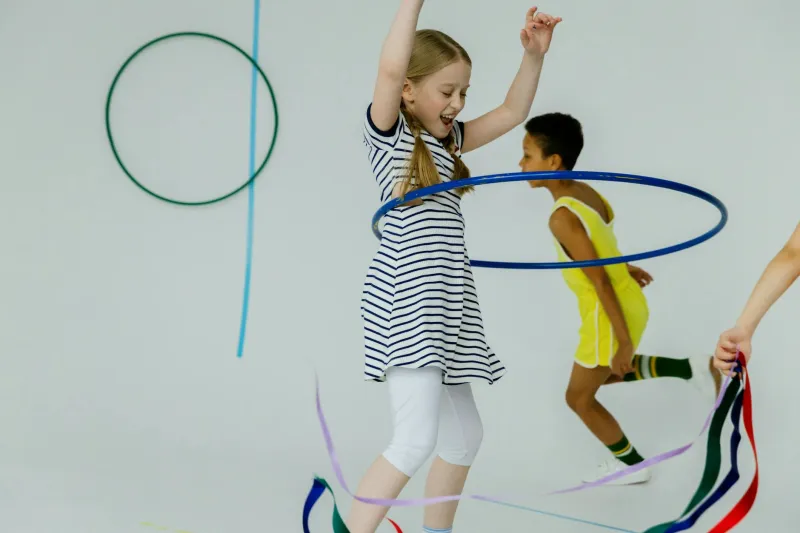
The Bamboo Circle That Started It All
Sometime in 1957, Arthur "Spud" Melin was flipping through a magazine when he spotted something that would change American fitness forever — though he had no idea at the time. The photograph showed Australian schoolchildren spinning bamboo hoops around their waists during gym class, a simple exercise that had been popular Down Under for years.
Melin, co-founder of the California toy company Wham-O, saw dollar signs. But not the kind you'd expect.
He wasn't thinking about fitness trends or exercise equipment. He was thinking about a cheap plastic toy that kids might enjoy for a few weeks before moving on to the next shiny thing. The bamboo hoops looked simple enough to manufacture, and if they caught on in American playgrounds, Wham-O might have a modest hit on their hands.
What happened next defied every prediction.
When 25 Million Americans Lost Their Minds
By March 1958, Wham-O had produced their first batch of "Hula Hoops" — plastic rings measuring 42 inches in diameter, available in bright primary colors. The name came from the hip-swiveling motion required to keep the hoop spinning, which reminded observers of traditional Hawaiian hula dancing.
The company's marketing strategy was refreshingly simple: give away free hoops to kids in Southern California playgrounds and let word-of-mouth do the rest.
It worked better than anyone imagined.
Within four months, Wham-O had sold 25 million hula hoops. To put that in perspective, that's roughly one hoop for every seven Americans alive at the time. The craze spread across the country like wildfire, with kids lining up outside toy stores and parents driving to multiple shops trying to find the coveted plastic rings.
But here's where the story gets interesting: it wasn't just kids who were hooping.
The Accidental Fitness Revolution
As the hula hoop craze swept America, something unexpected happened. Adults started picking up their children's toys — and discovering they couldn't put them down.
What began as innocent attempts to show kids "how it's done" quickly revealed a humbling truth: keeping a plastic ring spinning around your waist was surprisingly difficult. It required coordination, rhythm, and sustained movement that left many grown-ups winded after just a few minutes.
Suddenly, parents found themselves hooping in backyards across America, initially for laughs but increasingly for the workout. The constant hip motion, core engagement, and cardiovascular effort required to maintain the hoop's momentum was providing exercise that many adults hadn't experienced since their own childhood playground days.
Fitness experts of the era were skeptical, dismissing the hula hoop as a "silly fad" with no real exercise value. They were spectacularly wrong.
The Science Behind the Spin
Modern research has vindicated those 1958 backyard hoopers. A 30-minute hula hoop session can burn between 200-300 calories — comparable to a brisk walk or light jog. The circular motion engages core muscles, improves balance and coordination, and provides both cardiovascular and strength benefits.
But perhaps more importantly, hula hooping tapped into something that traditional exercise often lacks: pure, childlike fun. While adults struggled through regimented calisthenics or boring gym routines, hooping felt like play. It was exercise disguised as entertainment, fitness wrapped in nostalgia.
This psychological element proved crucial to the hula hoop's longevity. While other fitness fads relied on discipline and willpower, hooping relied on joy.
Surviving Every Fitness Trend
The initial hula hoop craze peaked and faded by 1959, as most toy fads do. But unlike other passing trends, it never completely disappeared. The plastic rings kept showing up in unexpected places: physical therapy clinics, where therapists discovered their value for rehabilitation; dance studios, where choreographers incorporated them into routines; and eventually, serious fitness facilities.
Through the aerobics boom of the 1980s, the home gym explosion of the 1990s, and the boutique fitness revolution of the 2000s, hula hoops quietly persisted. They survived because they solved a fundamental problem that plagues most exercise: how to make working out feel effortless.
The Modern Hoop Renaissance
Today, walk into any major gym chain and you'll likely find weighted hula hoops in the equipment area. Browse Instagram fitness accounts and you'll see "hooping" videos with millions of views. The toy that fitness experts once mocked has become a legitimate piece of exercise equipment, complete with specialized variations for different workout intensities.
Weighted hoops, LED hoops, collapsible travel hoops — the simple plastic ring has spawned an entire product category. Fitness studios now offer "hooping classes," and physical therapists regularly prescribe hula hoop exercises for patients recovering from back injuries or seeking low-impact cardio options.
The Lesson in the Loop
The hula hoop's journey from dismissed toy to fitness staple reveals something profound about how we approach exercise. Sometimes the most effective workouts don't feel like work at all. Sometimes the best fitness equipment comes disguised as a children's toy. And sometimes the experts are wrong about what constitutes "real" exercise.
Arthur Melin thought he was creating a simple toy that would entertain kids for a summer. Instead, he accidentally invented a piece of exercise equipment that would outlast every fitness fad of the past 65 years. The plastic ring that was supposed to be a throwaway novelty became proof that the best innovations often happen when we're not trying to innovate at all.
The next time you see a hula hoop, remember: you're looking at one of America's most successful fitness products, even if it took decades for anyone to admit it.