A Ruined Batch of Grain and the Breakfast Table That Followed
A Ruined Batch of Grain and the Breakfast Table That Followed
Picture the average American morning: alarm goes off, kitchen light flickers on, a box gets pulled from the cabinet, and cereal hits the bowl before anyone's fully awake. It's one of the most automatic rituals in the country. But the food at the center of it — the humble cornflake — didn't come from a test kitchen or a food scientist with a vision board. It came from a botched experiment at a religious health retreat in Battle Creek, Michigan, in 1894.
And the man behind it wasn't trying to build a breakfast empire. He was trying to keep his patients from having too much fun.
The Sanitarium at the Center of It All
Dr. John Harvey Kellogg ran the Battle Creek Sanitarium, a sprawling health resort that blended medical treatment with the strict teachings of the Seventh-day Adventist Church. Kellogg was a physician, a prolific writer, and — by most accounts — a deeply unusual man. He believed that digestive health was the foundation of all human wellness, and that a bland, grain-heavy diet was the path to both physical and moral purity. Meat, alcohol, caffeine, and anything remotely stimulating were off the menu.
His patients — some wealthy, some genuinely ill — came to Battle Creek for a kind of total-body reset. They exercised, received electric shock treatments, took elaborate baths, and ate food so aggressively plain it was practically a punishment in itself.
That context matters, because it explains why Kellogg was cooking grain at all.
The Mistake That Changed Everything
In 1894, Kellogg and his younger brother Will Keith Kellogg were experimenting with wheat-based foods to expand the sanitarium's menu options. They boiled a batch of wheat, but before they could process it, something came up — the exact distraction has been lost to history — and the cooked grain sat out overnight.
The next morning, instead of tossing the stale batch, John Kellogg decided to run it through the grain rollers anyway. Rather than producing the flat, continuous sheet of dough they expected, the dried wheat broke apart into individual flakes — one per grain kernel.
They baked the flakes, tasted them, and realized they had stumbled onto something genuinely palatable. The patients liked it. The Kelloggs started serving it at the sanitarium, and before long, they were mailing it to former patients who asked for it by name.
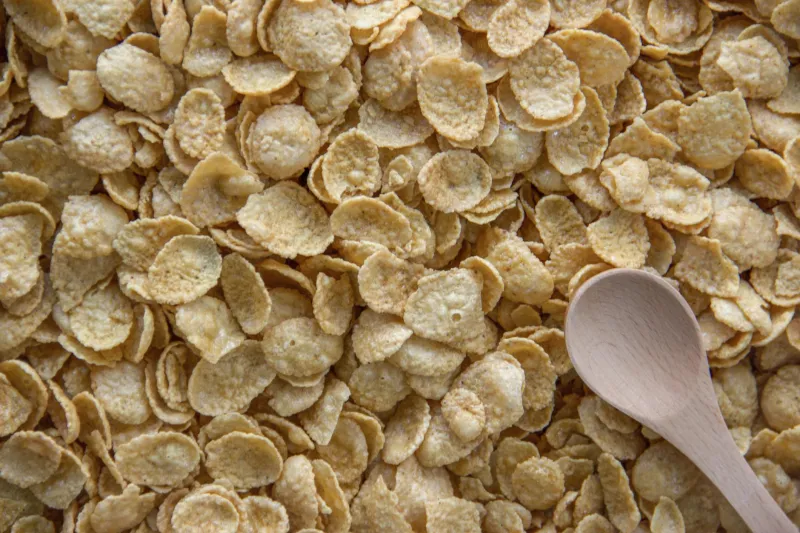
A few years later, they tried the same technique with corn, and the results were even better. The cornflake was born — not from ambition, but from a forgotten pot of boiled grain.
The Brother Who Saw the Business
Here's where the story splits, and where it gets a little complicated.
John Harvey Kellogg was not interested in commerce. He saw the flakes as medicine — a tool for health, not a product to be sold. But his brother Will had different instincts. Will could see that what they had wasn't just a diet food for sanitarium patients. It was something people actually wanted to eat.
Will pushed to add sugar to the recipe to broaden the appeal. John refused. The disagreement fractured their relationship permanently.
In 1906, Will broke away and founded the Battle Creek Toasted Corn Flake Company — later renamed the Kellogg Company — and started mass-producing sweetened cornflakes for the general public. He put his signature on every box as a mark of authenticity, because by that point, competitors were already flooding the market.
And there were a lot of competitors. Battle Creek had become a kind of Wild West for grain-based breakfast foods. One former patient, C.W. Post, had launched his own cereal company after staying at the sanitarium. Dozens of other entrepreneurs followed. Within a decade, the city had over 100 cereal companies operating within its limits.
From Health Fad to National Habit
What started as a fringe dietary experiment became the dominant American breakfast format within a generation. By the 1920s and 30s, boxed cereal was being marketed to children through radio programs and cartoon mascots. Kellogg's introduced Tony the Tiger in 1952. The cereal aisle, as we know it, was taking shape.
The genius — and the irony — is that Will Kellogg's commercial instincts took a product designed to suppress appetite and pleasure, and turned it into one of the most heavily marketed, sugar-loaded categories in the American grocery store. John Kellogg, who lived until 1943, reportedly never fully forgave his brother for it.
Why It Still Matters
The American cereal industry is worth over $10 billion today. Millions of households still start their mornings with a bowl of something that traces directly back to that overnight mistake in a Michigan kitchen.
But the deeper story here isn't really about cereal. It's about how accidents, when met with curiosity instead of frustration, have a way of becoming institutions. John Kellogg didn't invent cornflakes — he just didn't throw them away. That single decision, made over a pot of stale wheat, quietly restructured the morning routine of an entire country.
Next time you pour a bowl, it's worth a second to think about what you're actually holding: the byproduct of a ruined batch, a family argument, and one brother's eye for opportunity.