How a Metal Shortage Made Americans Stop Caring What Money Was Actually Worth
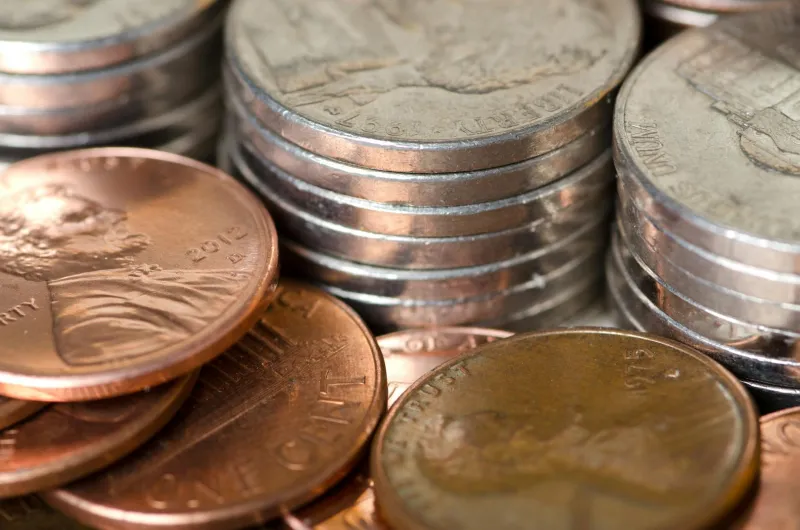
Reach into your pocket and pull out any coin. Hold it up to the light and consider this: that small piece of metal represents one of the most successful psychological experiments in American history. The trust you place in that coin has almost nothing to do with what it's made of — a reality that became crystal clear during a wartime crisis that most Americans have completely forgotten.
When Every Penny Counted for the War Effort
By 1943, World War II had created an unprecedented demand for copper. The metal was essential for shell casings, electrical wiring, and communications equipment. Every pound mattered for the war effort, and the U.S. Mint faced an uncomfortable reality: they were using millions of pounds of copper every year to make pennies.
 Photo: U.S. Mint, via www.coinnews.net
 Photo: World War II, via cdn.britannica.com
The math was stark. In 1942 alone, the Mint had used over 4,000 tons of copper for penny production — enough copper to manufacture 1.25 million artillery shells. With American forces fighting on multiple fronts, this seemed like an inexcusable waste of a critical war material.
The Radical Experiment Hidden in Plain Sight
The solution was as simple as it was revolutionary: make pennies out of something else. The Treasury Department decided to mint 1943 pennies from zinc-coated steel — the same material used for food cans. It would save 40,000 tons of copper annually while maintaining the familiar size and weight that Americans expected from their pocket change.
What they didn't fully anticipate was that they were about to conduct the largest real-world test of monetary psychology in American history. For the first time since the colonial era, U.S. currency would derive its value entirely from government backing rather than the intrinsic worth of its materials.
The Penny That Fooled Everyone
On January 1, 1943, the first steel pennies entered circulation. Most Americans barely noticed. The coins looked slightly different — more silvery than copper-brown — but they spent exactly the same way. Shopkeepers accepted them, banks processed them, and children collected them in piggy banks without a second thought.
This casual acceptance revealed something profound about how money actually works. Americans had become so accustomed to using coins as abstract units of value that the underlying metal had become almost irrelevant. The penny's worth came not from its copper content, but from the shared social agreement that it represented one cent of purchasing power.
When the Experiment Almost Failed
The steel pennies did create some unexpected problems. They rusted in humid climates, stuck to magnets (causing issues with vending machines), and were easily confused with dimes due to their silver appearance. Some merchants initially refused them, suspecting counterfeits.
More significantly, the coins highlighted a psychological quirk in how Americans related to their money. Copper pennies had always felt substantial — dense and warm to the touch. Steel pennies felt cheaper, lighter, somehow less "real." This wasn't about actual value; it was about the sensory experience of money that people had internalized over generations.
The Return That Proved the Point
By 1944, the Mint had switched back to copper pennies, but the lesson was learned. Americans had successfully used currency whose material value was essentially zero, and the economy hadn't collapsed. The brief experiment with steel pennies had demonstrated that money's power came from collective trust, not metallic content.
This realization would prove crucial in the decades that followed. When President Nixon ended the gold standard in 1971, completely severing the link between U.S. currency and precious metals, Americans barely blinked. They had already learned, through billions of small transactions with steel pennies, that money worked just fine as long as everyone agreed it worked.
The Digital Revolution's Steel Penny Moment
Today's shift toward digital payments represents the logical conclusion of the lesson learned in 1943. When you tap your phone to pay for coffee or transfer money through an app, you're participating in the same psychological framework that made steel pennies work: collective agreement that abstract symbols represent real value.
The wartime penny experiment had accidentally prepared Americans for a world where money could be nothing more than numbers on a screen. The trust that made people accept steel coins instead of copper made them equally willing to accept digital transactions instead of physical currency.
The Psychology of Financial Trust
What the steel penny revealed was that monetary trust operates on multiple levels simultaneously. At the surface level, people need currency to feel familiar and official — hence the careful attention to maintaining the penny's size and basic appearance. At a deeper level, they need confidence that others will accept the same currency in future transactions.
The U.S. government's ability to successfully substitute steel for copper demonstrated institutional credibility that would serve as the foundation for every subsequent monetary innovation. From credit cards to cryptocurrencies, each new form of payment has succeeded or failed based partly on whether it could replicate the psychological comfort that Americans first experienced with those wartime steel pennies.
The Invisible Infrastructure of Modern Life
Most Americans today have no idea that their grandparents once carried steel pennies, or that this brief wartime expedient helped establish the psychological foundation for modern finance. But every contactless payment, every digital transfer, every cryptocurrency transaction builds on the same principle that made those steel coins work: money is valuable because we collectively agree it's valuable, not because of what it's made from.
The 1943 steel penny wasn't just a wartime necessity — it was an accidental rehearsal for the digital economy, conducted with 684 million small pieces of evidence that Americans were ready to trust their money to be worth exactly what their government said it was worth, regardless of the materials involved.