The Beach Doodle That Became the Most Scanned Symbol on Earth
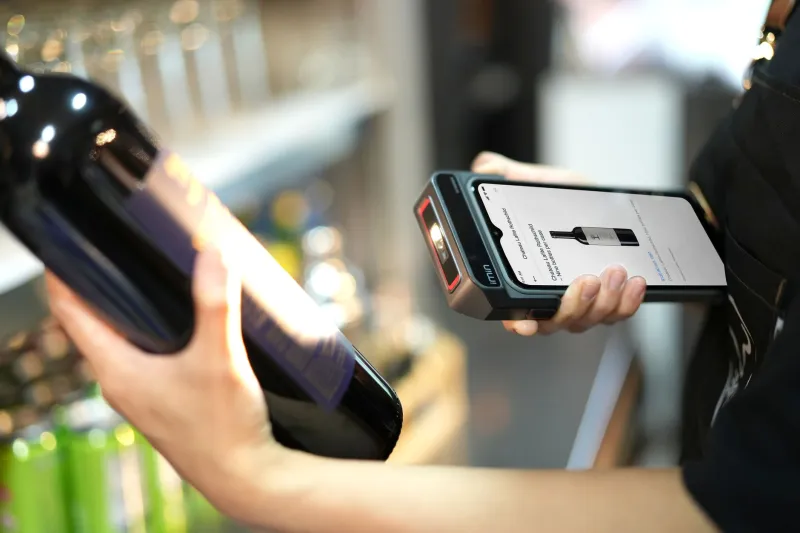
Nobody Wanted to Fix the Checkout Line
It's 1948, and a grocery store executive named Bernard Silver is walking the halls of Drexel University in Philadelphia when he overhears something that stops him cold. The president of a local supermarket chain is pleading with a dean, asking whether the university might develop a system to automatically read product information at checkout. The dean turns him down flat. Silver doesn't.
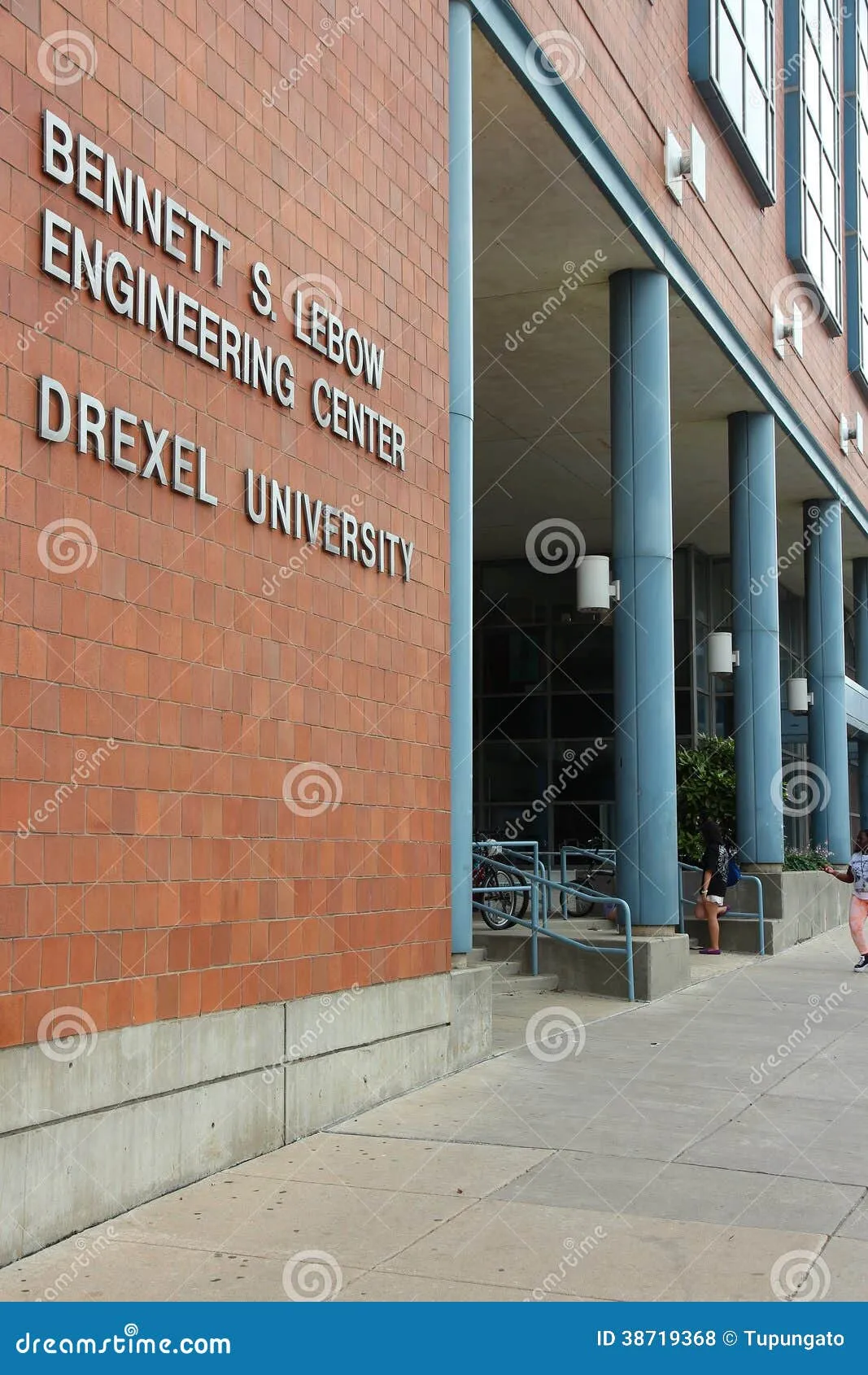 Photo: Drexel University, via thumbs.dreamstime.com
He pulls in a fellow graduate student named Norman Woodland, and together they start chasing an idea that almost everyone around them thinks is a waste of time. What they're trying to do, in plain terms, is teach a machine to read a label faster than a human cashier can. In 1948, that sounds like science fiction.
What makes their story remarkable isn't just that they eventually succeeded. It's how long the world refused to care.
Drawing the Answer in the Sand
Woodland was the kind of thinker who needed space to work. So he did what a lot of people do when they need to clear their head — he went to the beach. His family had a place in Miami, and it was there, sitting in the Florida sand sometime in late 1948 or early 1949, that the key idea arrived.
He'd been reading about Morse code, the dot-and-dash system that had carried telegraph messages across continents for a century. As he sat with his fingers trailing through the sand, he started drawing lines — thin ones and thick ones, pulled downward from dots and dashes, stretching them into something new. He looked at what he'd made and recognized it immediately: a pattern a machine could read.
The first barcode wasn't a rectangle of stripes. It was a circle — a bullseye pattern that could be scanned from any direction. Woodland and Silver filed their patent in 1949 and received it in 1952. The patent described using ultraviolet light to read the marks, and the ink they imagined using would glow under that light.
It was genuinely clever. And for the next two decades, almost nobody cared.
The Long Wait Nobody Talks About
The patent was eventually sold to Philco, then passed to RCA. Various companies looked at the technology, nodded politely, and moved on. The problem wasn't the idea — it was the infrastructure. Scanning required lasers powerful enough to read a pattern reliably, and in the 1950s and 1960s, that hardware either didn't exist or cost more than any grocery chain could justify.
The bullseye design also turned out to have a practical flaw: ink had a tendency to smear during printing, and a smeared bullseye became unreadable. The circular design was elegant in theory but fragile in the real world.
Meanwhile, American supermarkets kept growing. Self-service stores were expanding rapidly, product variety was exploding, and the checkout line — the same bottleneck that prompted that original conversation at Drexel — was getting worse, not better. The pressure to find a solution was building quietly in the background.
The Moment Everything Clicked
By the early 1970s, the grocery industry had gotten serious. A trade group called the Ad Hoc Committee on a Uniform Grocery Product Code was working to standardize how products were labeled — because without a shared standard, no scanning system could work across different stores and suppliers.
In 1973, the committee chose a symbol. Not the bullseye. Instead, they went with a rectangular pattern of vertical lines — the design we recognize today — developed by IBM engineer George Laurer. The linear barcode was more forgiving of printing imperfections and easier for the laser scanners of the era to read reliably.
On June 26, 1974, at a Marsh supermarket in Troy, Ohio, a pack of Wrigley's Juicy Fruit gum became the first product commercially scanned using the new Universal Product Code. That pack of gum now lives in the Smithsonian.
What followed was slow at first, then overwhelming. Retailers resisted the upfront cost of installing scanners. Manufacturers were reluctant to print codes until stores could read them. It was a classic chicken-and-egg standoff that took most of the late 1970s to break.
How the Barcode Rewired American Commerce
Once adoption reached a tipping point in the early 1980s, the effects were staggering and far-reaching in ways nobody had fully anticipated.
Checkout speed was the obvious win. But the deeper transformation was informational. For the first time, retailers could track exactly what sold, when it sold, and in what quantities — in real time. Inventory management went from guesswork to precision. Pricing could be adjusted faster. Suppliers could be held to tighter delivery windows.
Wal-Mart, which embraced barcode scanning earlier and more aggressively than almost any other retailer, used the data it collected to squeeze costs in ways that reshaped entire supply chains. The barcode didn't just speed up checkout — it handed retailers a tool for economic leverage they'd never had before.
Today, roughly 10 billion barcodes are scanned every single day around the world. The technology has migrated far beyond grocery stores into hospitals, libraries, shipping logistics, boarding passes, and prescription bottles. The QR code — that pixelated square your phone reads at restaurants — is a direct descendant of Woodland's beach doodle.
The Quiet Legacy of a Dismissed Idea
Norman Woodland lived to see all of it. He died in 2012 at the age of 91, having watched his sand-drawn pattern become one of the most reproduced symbols in human history. He received the National Medal of Technology in 1992, finally getting the recognition that took four decades to arrive.
The story of the barcode is a good reminder that the gap between a working idea and a working idea that the world is ready for can be enormous. Woodland had the insight in 1949. The world caught up in 1974. And by the 1980s, it was impossible to imagine shopping without it.
Every time you hear that familiar beep at the register, you're hearing the echo of a man dragging his fingers through Florida sand, trying to solve a problem nobody else thought was worth solving.