The Anxious Patients Who Accidentally Invented the American Media Business Model
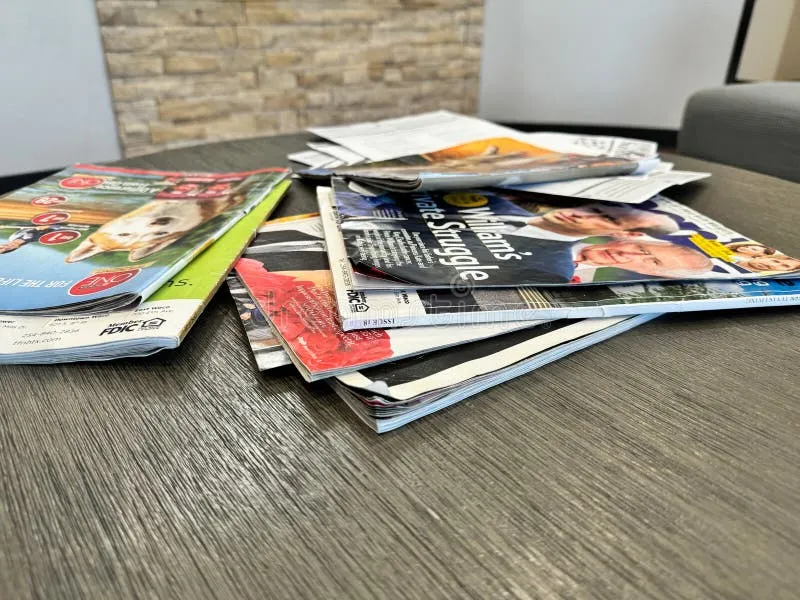
Photo: vintage magazines stacked in a doctor waiting room, via thumbs.dreamstime.com
Think about the last time you sat in a waiting room. Maybe you reached for a magazine on the side table without even thinking about it — a reflex so ingrained it barely registers as a choice. You flipped through a few pages, glanced at an advertisement or two, maybe read half an article before your name was called.
That experience, ordinary as it feels, is the direct descendant of a publishing revolution that began in the late 1800s. And it started not with a bold editorial vision or a savvy business strategy, but with dentists trying to stop their patients from panicking.
The Problem With Going to the Dentist
In the second half of the nineteenth century, going to the dentist was genuinely frightening in ways that are hard to fully appreciate today. Anesthesia was limited, drilling technology was primitive, and the experience was often painful enough that patients worked themselves into considerable anxiety just sitting in the chair — or waiting to sit in it.
Dentists, who were increasingly trying to establish themselves as legitimate medical professionals rather than the traveling tooth-pullers of earlier generations, had a practical problem: distressed patients were harder to treat. An anxious patient tensed up, made procedures more difficult, and was more likely to avoid returning for follow-up care.
The solution some practitioners hit upon was elegantly simple. Leave something to read in the waiting area. Give patients something to focus on other than the sounds coming from the treatment room. The tactic worked. Reading occupied the mind, slowed the breathing, and made the wait feel shorter.
At first, the reading material was whatever the dentist happened to have on hand — newspapers, pamphlets, the occasional novel. But as the practice became more common through the 1880s and 1890s, general-interest magazines emerged as the format of choice. They were varied enough to appeal to different patients, short enough that pieces could be read in a single sitting, and inoffensive enough not to cause controversy in a professional setting.
Publishers Discover the Captive Reader
Here is where the story gets interesting from a business perspective. By the late 1800s, American magazines were primarily subscription products sold to relatively affluent, educated households. Publications like Harper's Monthly and The Atlantic had loyal readerships, but their reach was limited by price and by the assumption that reading a magazine was something you did at home, in private, by choice.
 Photo: The Atlantic, via i.natgeofe.com
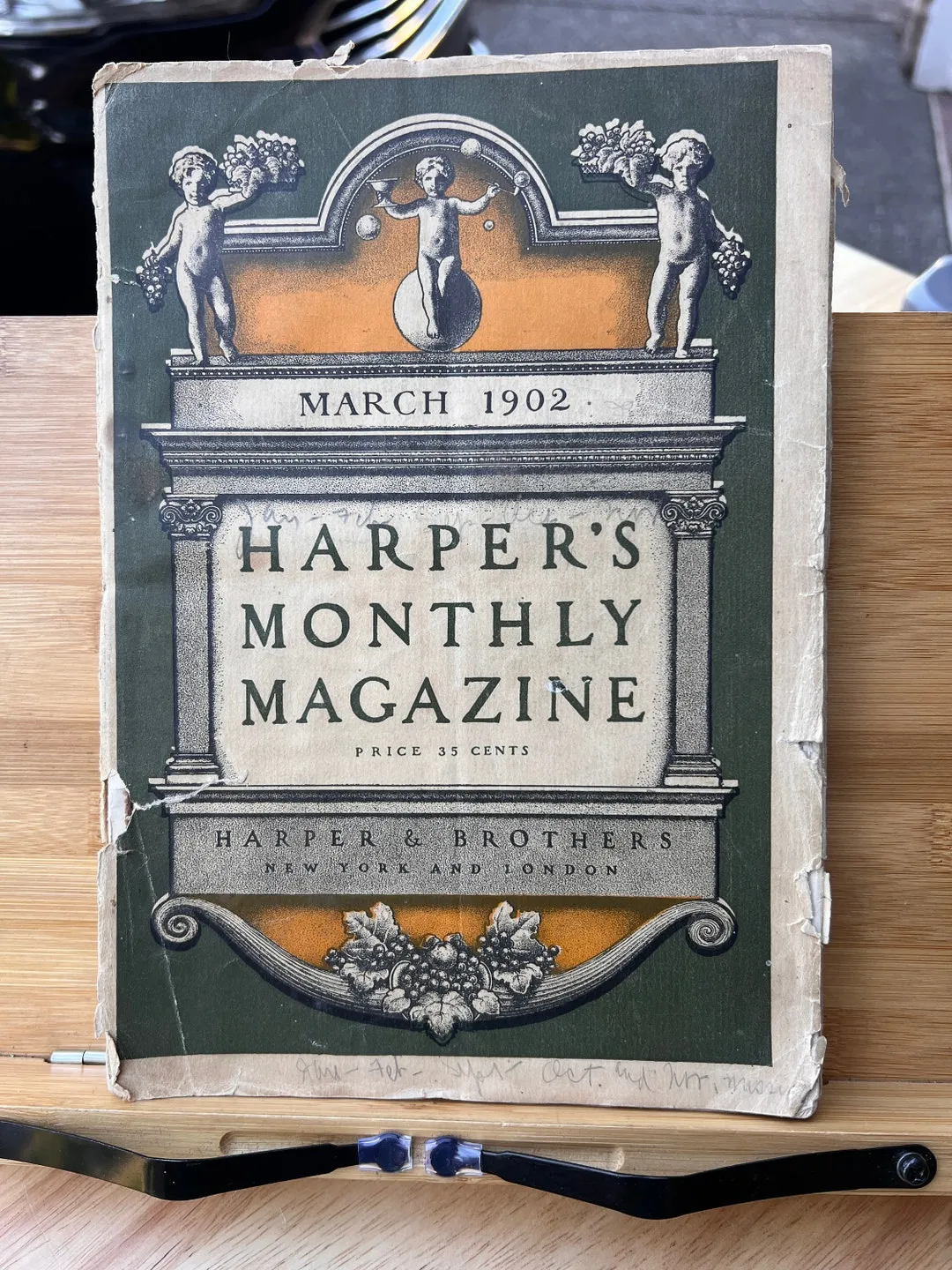 Photo: Harper's Monthly, via i.etsystatic.com
The waiting room changed that assumption. Suddenly, magazines were being encountered by people who hadn't necessarily sought them out — people from a wider range of backgrounds, sitting in a quasi-public space, with nothing else to do. This was a fundamentally different kind of reader, and a fundamentally different kind of reading experience.
Publishers began to pay attention. The waiting room reader wasn't choosing a magazine the way a subscriber chose it — with deliberate loyalty to a particular publication. The waiting room reader picked up whatever was there. That meant the magazine had to earn attention from the very first page. Headlines needed to hook immediately. Articles needed to deliver quickly. Layouts needed to be visually arresting.
These pressures pushed magazine design in new directions. Shorter articles, stronger visual elements, and more varied content became editorial priorities — not because editors wanted them, but because the waiting room audience demanded them without even knowing it.
The Advertising Pivot That Changed Everything
The more profound consequence, though, was what waiting rooms revealed to advertisers. A captive audience — anxious, bored, and temporarily cut off from other distractions — turned out to be an extraordinarily receptive one. Advertisements placed in magazines that sat in waiting rooms reached readers who had time to actually look at them. Not skim. Look.
This insight arrived at exactly the right moment. The 1890s saw a dramatic shift in how American magazines were funded. Cyrus Curtis, publisher of the Ladies' Home Journal and later the Saturday Evening Post, made a bet that would reshape the entire industry: he dropped his subscription price dramatically — in some cases to nearly nothing — and made up the revenue through advertising sales instead.
 Photo: Cyrus Curtis, via www.orangecountymugshots.com
The logic was straightforward. A cheap magazine reached more readers. More readers meant a larger audience to sell to advertisers. Advertisers would pay more to reach that larger audience than subscribers would ever pay in subscription fees. The magazine became, in effect, a vehicle for delivering readers to advertisers rather than content to readers.
Waiting rooms were a perfect proof of concept for this model. They demonstrated that readers didn't need to actively choose or pay for a magazine to engage with it — and that engagement, even passive engagement, had real commercial value. The dentist's office was, in its way, an early prototype of the attention economy.
The Model That Outlasted the Medium
The advertising-driven media model that crystallized in the late nineteenth and early twentieth centuries — give the content away cheaply or free, monetize the audience's attention — became the dominant template for American publishing throughout the twentieth century. It shaped newspapers, radio, television, and eventually the internet.
Every time you scroll through a social media feed filled with content you didn't pay for but surrounded by advertisements you didn't ask for, you are experiencing the direct evolution of what dentists accidentally invented when they started stacking magazines on a side table to calm nervous patients.
The publications themselves have changed almost beyond recognition. The waiting rooms are still there. And in most of them, somewhere between the chairs and the water cooler, there's still a stack of magazines.
Some things trace back further than you'd think.