The Game You Were Never Going to Win — And Why You Kept Playing Anyway
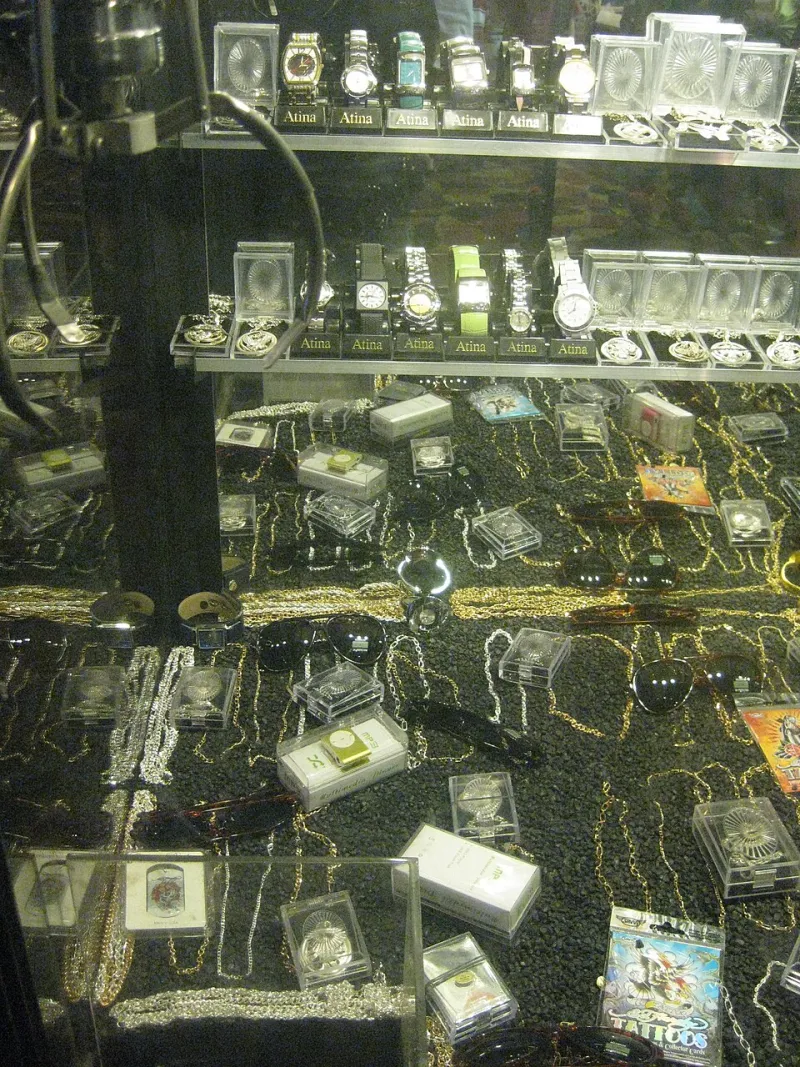
Photo: Michael Ocampo, CC BY 2.0, via Wikimedia Commons
You already know, on some level, that the milk bottle toss is rigged. The bottles are weighted. The balls are slightly undersized. The distance is calibrated so that a clean hit still doesn't produce a clean knock-down. You know this. You play anyway. And that gap — between knowing and doing — is the most valuable piece of intellectual property in the history of American entertainment.
Carnival midway games are one of the oldest continuous psychological experiments in the country. And the people running them figured out the human brain long before the scientists did.
The Traveling Fair and the Art of the Almost
Itinerant fairs swept across America in the decades following the Civil War, moving by rail from town to town, setting up overnight, and departing before most complaints could catch up with them. The midway — the stretch of game booths that flanked the path toward the main attractions — was where operators made the real money.
The games themselves were almost beside the point. What operators were actually selling was a feeling: the sensation of being close to winning. This is the near-miss effect, and carnival workers understood it intuitively long before behavioral economists gave it a name.
A near-miss isn't a loss. Neurologically, it registers somewhere between a loss and a win — close enough to success that the brain reads it as meaningful, as almost, as next time. Fairground operators built entire game mechanics around manufacturing near-misses. The ring toss peg that the ring bounces off of rather than settling around. The balloon dart that deflates rather than pops. The rifle sight that's imperceptibly bent. None of these are accidents. They're engineering.
The oversized stuffed animals hanging from the top of the booth — the giant pandas, the six-foot SpongeBobs — weren't prizes in any realistic sense. Almost nobody won them. They were architecture. Their job was to make the booth visible from a hundred yards away and to anchor the imagination of every person who walked past. You weren't really trying to win the giant bear. You were trying to prove you could.
When the Fairground Moved Indoors
The leap from carnival midway to casino floor is shorter than it looks.
Early slot machines, arriving in American saloons in the 1890s, borrowed directly from the visual language of fairground games: bright colors, symbols arranged in rows, a mechanical reveal that built anticipation. But it was the postwar expansion of legal gambling — Nevada in the 1940s and 50s, Atlantic City in the 70s, and eventually the tribal casino boom of the 80s and 90s — that allowed casino designers to apply genuine scientific rigor to what carnival operators had been doing by feel.
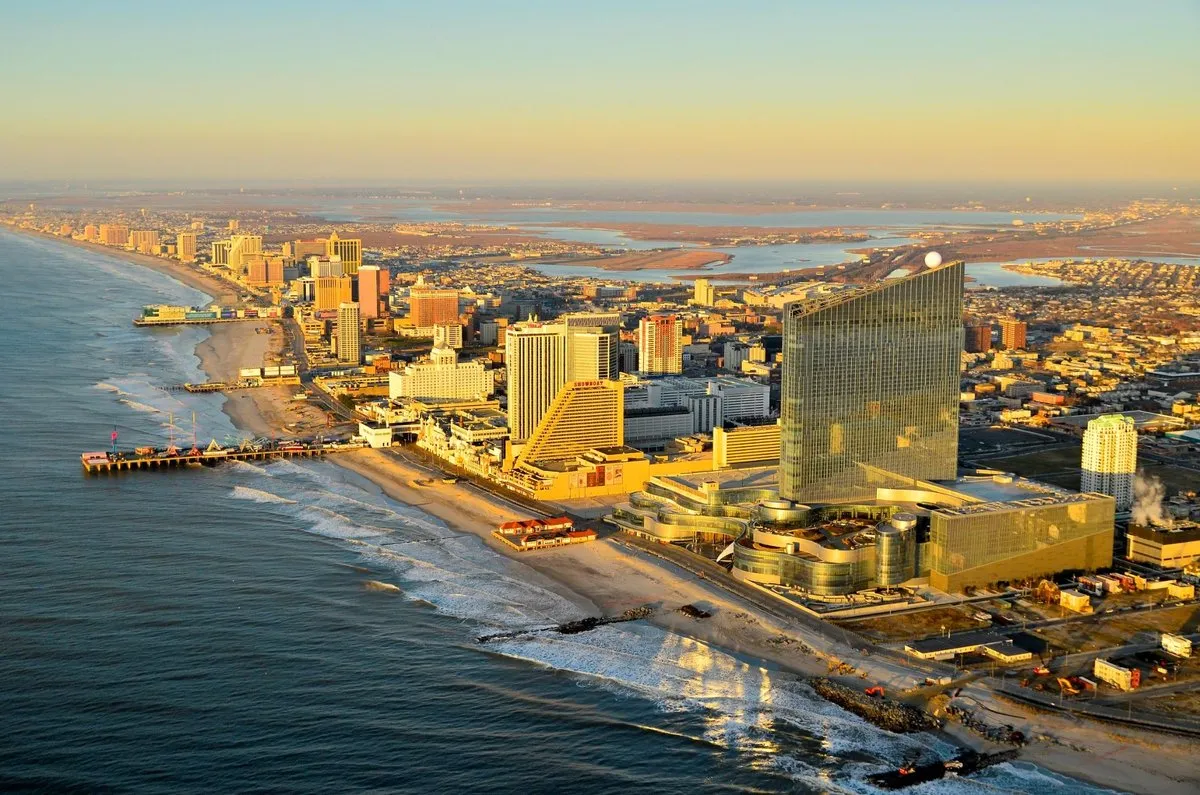 Photo: Atlantic City, via dynamic-media-cdn.tripadvisor.com
Mid-century casino researchers documented the near-miss effect formally. They found that slot machines programmed to produce near-misses at a higher rate than chance would predict kept players at the machine significantly longer than machines that didn't. The sensation of almost winning was more compelling than the experience of winning itself, because winning ended the game. Almost winning kept it open.
State lottery commissions absorbed the same lesson. Scratch tickets are a masterclass in near-miss engineering — three symbols instead of two, just enough matching numbers to feel tantalizing. Multi-state jackpot drawings, with their drawn-out reveals and cascading almost-wins, are built on the same psychological skeleton as the ring toss booth at a county fair in 1887.
The Algorithm Learned the Same Trick
Here is where the story arrives somewhere uncomfortable.
The behavioral patterns that carnival operators identified — the power of variable rewards, the near-miss effect, the outsized influence of visible prizes on perceived probability — are the foundational mechanics of modern mobile gaming and, increasingly, social media itself.
Variable reward schedules, where the timing and size of a reward are unpredictable, produce stronger behavioral reinforcement than fixed ones. B.F. Skinner documented this with pigeons in the 1950s. Silicon Valley applied it to smartphones in the 2010s. The pull-to-refresh gesture on a social feed is, mechanically, a slot machine lever. The notification badge is the near-miss — something might be there, something worth checking.
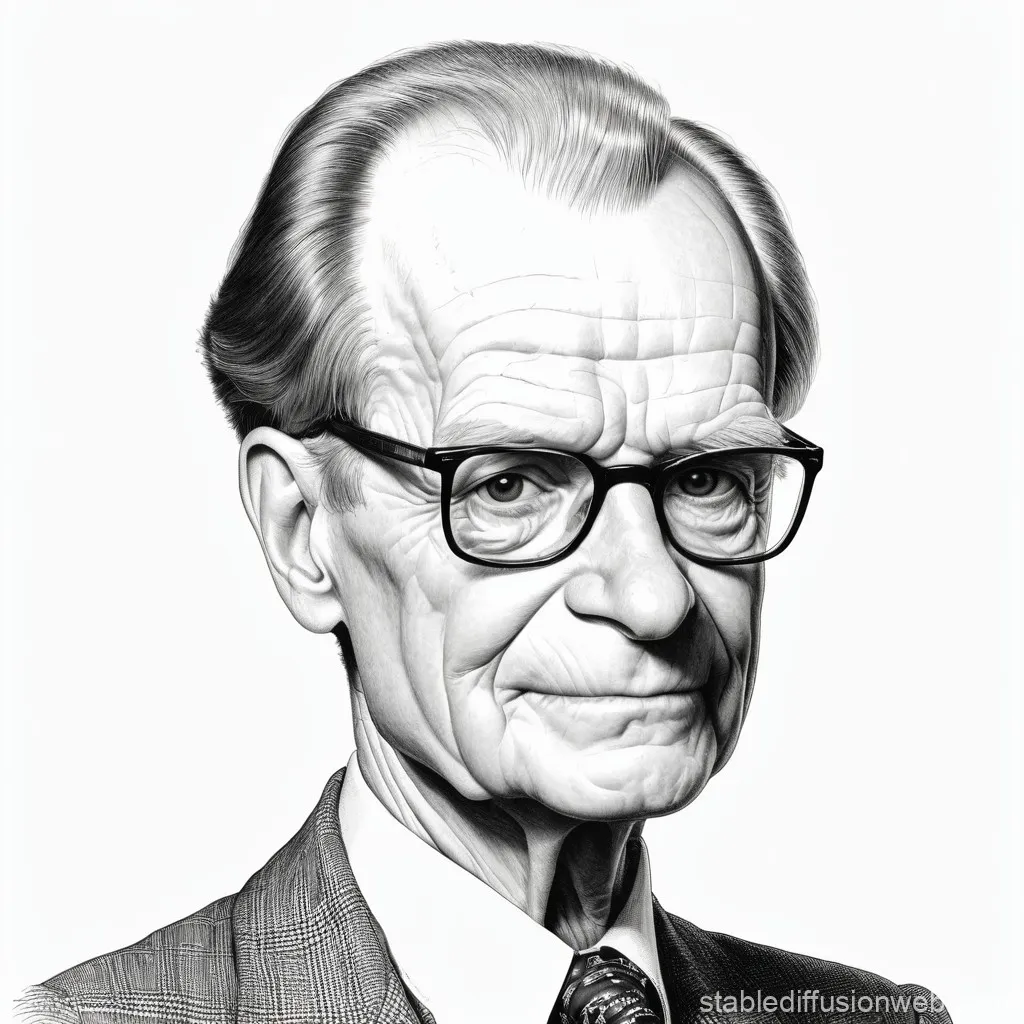 Photo: B.F. Skinner, via imgcdn.stablediffusionweb.com
Free-to-play mobile games took the carnival model and stripped away the pretense entirely. Loot boxes — randomized in-game reward packages purchased with real money — reproduce the exact economics of the midway: a small cost, a random outcome, an outsized prize visible in the background that almost nobody ever actually receives. Several countries have classified loot boxes as gambling under existing law. The United States, as of this writing, largely has not.
The through-line from a weighted milk bottle to a loot box is direct. The setting changed. The suit of the person running the game changed. The mechanism did not.
What the Sawdust Actually Taught Us
There's a version of this story where carnival operators are the villains — grifters exploiting rubes. And some of them were. But the more honest read is that they were early cartographers of a territory that turns out to be enormous: the space between what people know and what they do.
Every person who plays a midway game knows the odds are bad. Every scratch ticket buyer knows the expected return is negative. Every mobile gamer who's ever bought a loot box knows, on some level, that the math doesn't favor them. The knowledge doesn't neutralize the pull.
That's not a character flaw. It's a feature of human cognition that fairground operators discovered, casino designers refined, and app developers have now industrialized at global scale.
The carnival is still running. It just doesn't have sawdust on the floor anymore.