She Was Just Tired of Gritty Coffee: How One Woman's Kitchen Frustration Built America's Morning Routine
She Was Just Tired of Gritty Coffee: How One Woman's Kitchen Frustration Built America's Morning Routine
Most mornings, somewhere between the alarm and the front door, an American reaches for a coffee maker without thinking twice about it. It's just there. It's always been there. But the machine sitting on your counter right now — dripping hot water through a paper filter and into a glass pot — exists because a woman in Dresden got tired of spitting out coffee grounds in 1908.
That's where this story starts. Not in Silicon Valley, not in a wartime government lab, not in a corporate R&D department. In a kitchen. With a frustrated housewife, a brass pot, and a piece of blotting paper.
The Woman Who Fixed Breakfast
Melitta Bentz had a simple problem. The coffee of her era was either brewed by boiling grounds directly in water — producing a bitter, gritty sludge — or filtered through linen cloth that was nearly impossible to clean and made the drink taste faintly of old laundry. Neither option was acceptable to her.
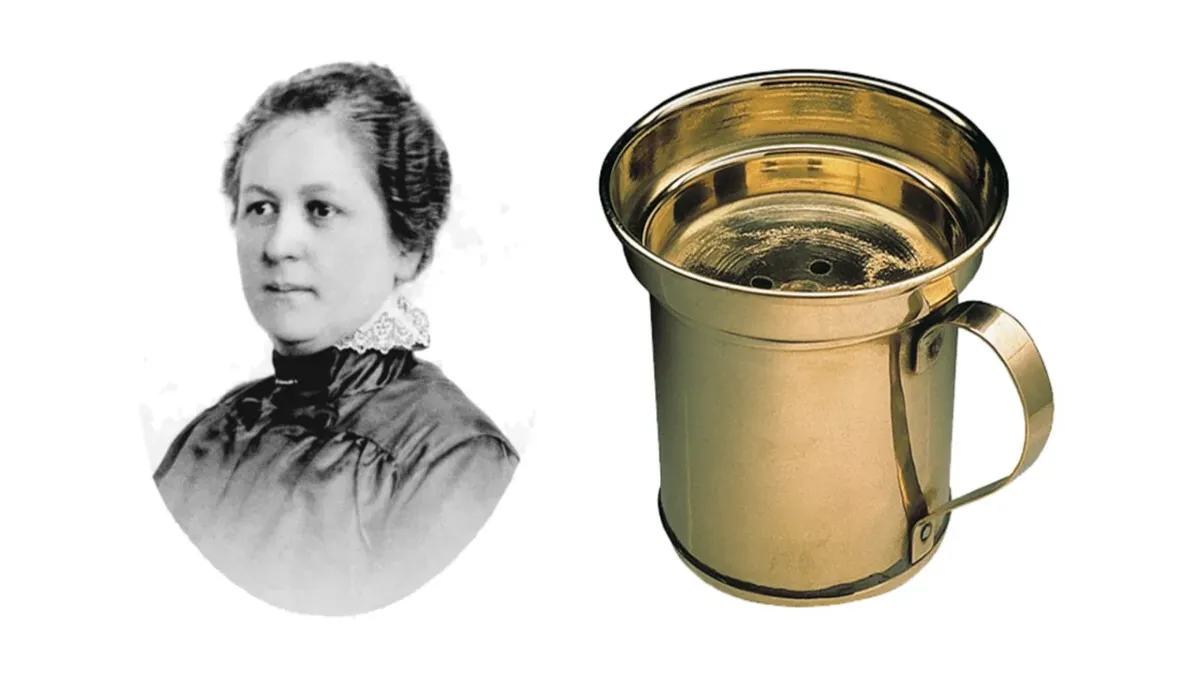 Photo: Melitta Bentz, via img-cdn.thepublive.com
So she improvised. She took a brass pot, hammered holes in the bottom, and lined it with a circular piece of blotting paper pulled from her son's school notebook. Hot water poured over the grounds filtered clean through the paper and dripped into the cup below. The result was smooth, clear, and — crucially — free of sediment.
She patented the design that same year. Her company, Melitta, still exists today. But in 1908, what she'd built was a manual pour-over system. The electric version — the one that would eventually colonize American kitchens — was still decades away.
The Long Road to the Plug
The idea of automating the drip process had been floating around European engineering circles since the early twentieth century, but nobody cracked a commercially viable version until the 1950s. A Swiss company called Hanseatic produced early electric drip machines for European markets, and a handful of inventors filed competing patents across Germany and Scandinavia. The concept worked, but the market wasn't ready.
America, meanwhile, was still largely a percolator country. The percolator — which recycled hot water up through a tube and over the grounds repeatedly — had dominated US kitchens since the late 1800s. It was loud, it was inefficient, and it routinely burned the coffee by cycling it through boiling water over and over again. Americans loved it anyway. It felt industrial. It felt serious. It felt like coffee was supposed to be an ordeal.
That changed after World War II, and not entirely because of taste.
Suburbs, Appliances, and the Kitchen as Status Symbol
The postwar housing boom reshaped American domestic life in ways that went far beyond square footage. The new suburban home came with a kitchen designed to be shown off — open, modern, and stocked with appliances that signaled prosperity. Refrigerators, toasters, electric ranges, and countertop gadgets became markers of the good life. Manufacturers understood this completely.
When Hoover, Sunbeam, and General Electric started competing for counter space in the 1950s and 60s, coffee makers were part of the arms race. The percolator was being quietly outmaneuvered by sleeker, faster alternatives. And when a German-engineered electric drip machine called the Wigomat — widely considered the first true electric drip coffee maker, patented in 1954 by Gottlob Widmann — found its way to American trade shows, appliance buyers took notice.
The design was simple: a heating element, a reservoir, a filter basket, and gravity. Water heated, rose, and dripped through grounds into a waiting carafe. No recycling. No burning. One pass, clean cup.
The Sears Moment
What actually moved the needle for American consumers wasn't the technology — it was distribution. When Mr. Coffee, founded in 1972 by Vincent Marotta and Samuel Glazer, struck a deal to sell their electric drip machine through Sears, the game changed overnight. Sears in the early 1970s wasn't just a store — it was the infrastructure of American consumer culture. If Sears carried it, America bought it.
Marotta also made one of the shrewdest marketing moves of the decade: he hired baseball legend Joe DiMaggio as the brand's spokesperson. DiMaggio was trusted, familiar, and universally respected. If he was drinking drip coffee, it wasn't a European affectation — it was the American way to start the day.
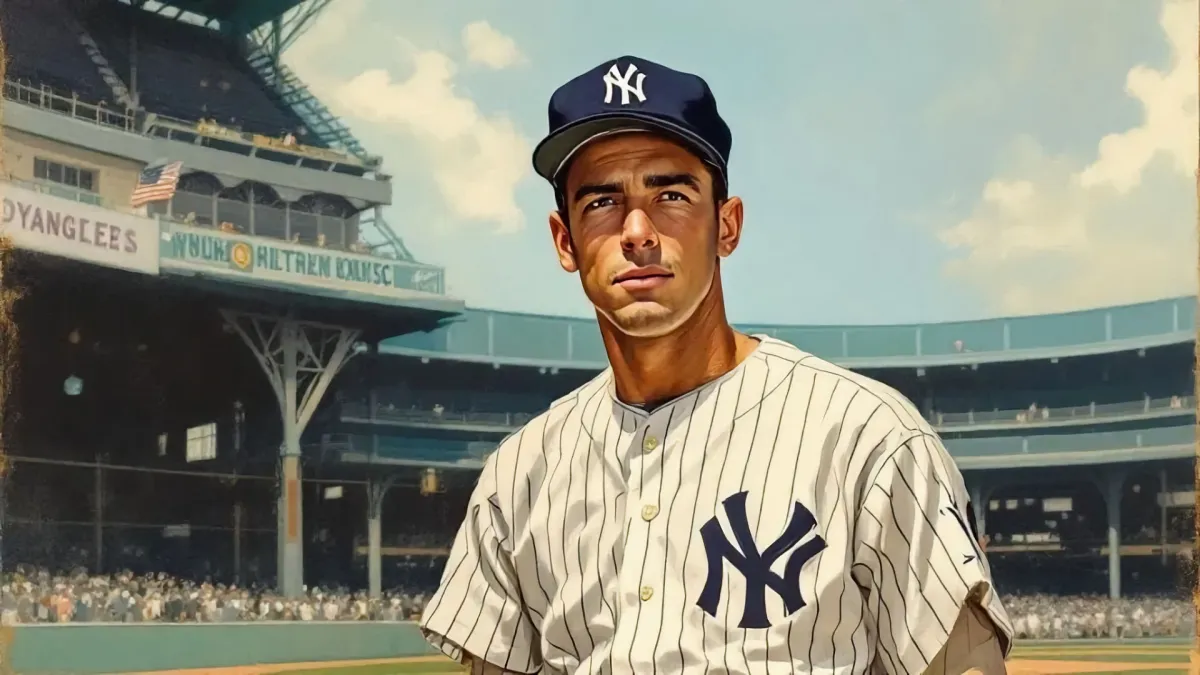 Photo: Joe DiMaggio, via compacthistories.com
Mr. Coffee sold 40,000 units in its first year. Within a decade, the electric drip coffee maker had displaced the percolator almost entirely from American kitchen counters.
What It Actually Changed
The machine didn't just change how Americans made coffee. It changed when and how often they drank it. The drip maker was fast, programmable, and mostly hands-off. You could set it up the night before. You could have a full pot ready before you were fully awake. Coffee stopped being something you made and started being something that was just ready.
That shift in expectation — coffee as ambient, automatic, always-there — is the invisible architecture behind the $100 billion American coffee industry. It's what made the office coffee station a workplace institution. It's what Starbucks built its entire mythology of improving upon. It's what Keurig disrupted in the 2000s by making the drip concept even more instant, even more effortless.
Every iteration of American coffee culture since 1972 has been a conversation with that original drip machine — either trying to replicate its simplicity or transcend it.
And it all traces back to a woman in Dresden who was done tolerating bad coffee and decided to do something about it with a piece of notebook paper.
Some mornings, the most ordinary objects carry the longest histories. The next time your coffee maker beeps, it's worth knowing whose frustration is really waking you up.