Before the Boardroom, the Handshake Belonged to a Very Different Kind of Deal
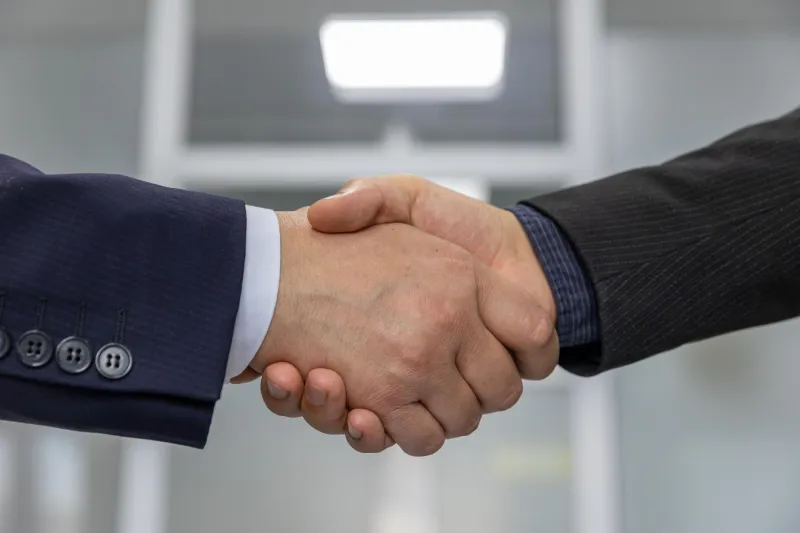
Every job offer ends with one. Every major contract gets sealed by one. Walk into a business meeting anywhere in America and the first thing that happens, before a word is spoken about the actual business, is that two people grab each other's right hand and pump it once or twice.
The handshake is so embedded in American professional culture that skipping it feels like a small act of aggression. Offer one and have it refused and the slight lingers for the rest of the meeting. Execute one with the right firmness and you've already communicated something positive about yourself before you've said a word.
But where did this particular gesture come from? And why — out of all the ways humans have greeted each other across history — did this one become the default signal of trustworthiness in American business?
The Weapons Check That Became a Greeting
The most widely cited origin story for the handshake places it in medieval Europe, and it's one of those explanations that sounds almost too tidy to be true: knights extended their sword hand — the right hand — to demonstrate that they weren't holding a weapon, and the clasping of hands was a mutual declaration of peaceful intent.
Historians debate how literally to take this explanation. What's less debated is that the extended open right hand as a gesture of non-aggression appears across many cultures and many centuries, suggesting that the underlying logic — look, nothing concealed, nothing threatening — is genuinely ancient. The handshake as a formalized greeting, though, took much longer to develop into the specific ritual we recognize today.
In ancient Greece and Rome, the handshake appears in artwork and written records as a gesture of agreement and alliance. It showed up in funerary carvings as a symbol of connection between the living and the dead. It was used in formal oaths. But it wasn't yet the universal social greeting it would eventually become in the West.
The Quakers and the Democratization of the Handshake
The handshake's rise to social prominence in the English-speaking world owes a significant debt to the Religious Society of Friends — the Quakers — who adopted it deliberately in the 17th century as a rejection of hierarchical greetings.
In 17th-century England, greetings were deeply class-coded. You bowed to those above you, you received bows from those below you, and the depth and character of the bow communicated the precise social distance between two people. The Quakers found this system incompatible with their belief in the fundamental equality of all people before God. They refused to doff their hats to social superiors and adopted the handshake as an egalitarian alternative — a greeting that was identical regardless of the social standing of either party.
This was a genuinely radical act in its time, and it associated the handshake with a specific set of values: equality, directness, and honesty. Quaker merchants became known for conducting business without the elaborate social theater of the era, and their reputation for straight dealing helped cement the handshake as a gesture associated with trustworthy commerce.
By the time those values migrated across the Atlantic and took root in American commercial culture, the handshake carried considerable moral weight. It wasn't just a greeting. It was a statement about the kind of person you were and the kind of deal you were prepared to make.
The Other Places It Showed Up
Here's where the origin story gets more complicated — and more interesting.
The handshake's symbolic function as a binding agreement meant it appeared in contexts well outside polite society. In 18th and 19th century social establishments — gambling houses, taverns, and the brothels of London and New York — the handshake served the same purpose it did in merchant houses: it was a way of sealing a transaction between parties who had no legal recourse if things went wrong. When you can't take someone to court to enforce an agreement, you rely on social pressure and personal reputation. The handshake made the terms of a deal visible and witnessed.
This dual life — simultaneously the gesture of respectable Quaker merchants and the informal contract of underground economies — tells you something important about why it worked. The handshake functioned as a trust mechanism precisely in situations where formal legal structures either didn't exist or couldn't be invoked. It was the agreement you made when you needed the other person to feel personally committed to honoring their word.
American business culture, which has always maintained a complicated relationship with formal legal structures and placed enormous value on personal reputation, found this mechanism deeply compatible with how it wanted to operate.
The Firm Grip and What It Signals
By the 20th century, the handshake had become so central to American professional culture that an entire secondary language developed around it. The firmness of the grip became a proxy for character. Business etiquette guides from the mid-1900s onward devoted serious attention to handshake technique — not too limp, not bone-crushing, eye contact maintained, two pumps, release.
This codification reveals something telling. The handshake had become so important as a trust signal that Americans developed explicit rules for performing it correctly, which means they were also developing the capacity to read it as a performance. A bad handshake didn't just feel awkward — it communicated something negative about the person giving it. Entire first impressions hinged on it.
Job interview coaches still talk about this. Sales training programs still cover it. The handshake remains one of the most analyzed five-second interactions in American professional life.
Why This One Gesture Won
The handshake survived and dominated for a reason that has nothing to do with hygiene or practicality and everything to do with what it communicates structurally. It requires both parties to physically commit. You can't half-do a handshake — you either extend your hand or you don't, and the other person either takes it or refuses. That binary quality makes it a clean, legible signal in a way that a nod or a bow isn't.
It also creates a moment of physical contact that, however brief, registers differently than a visual gesture. Neuroscience research on touch suggests that even minimal physical contact increases feelings of trust and cooperation. The handshake was accidentally doing something neurologically useful long before anyone understood why.
From knights clearing their sword hands, to Quakers refusing to bow, to the informal economies of 18th-century social establishments, to the corner office on a Tuesday afternoon — the handshake carried the same basic message across all of it.
I'm not hiding anything. We have a deal.
That message, it turns out, never gets old.