The Little Door Behind Your Bathroom Mirror Is Hiding More Than Aspirin
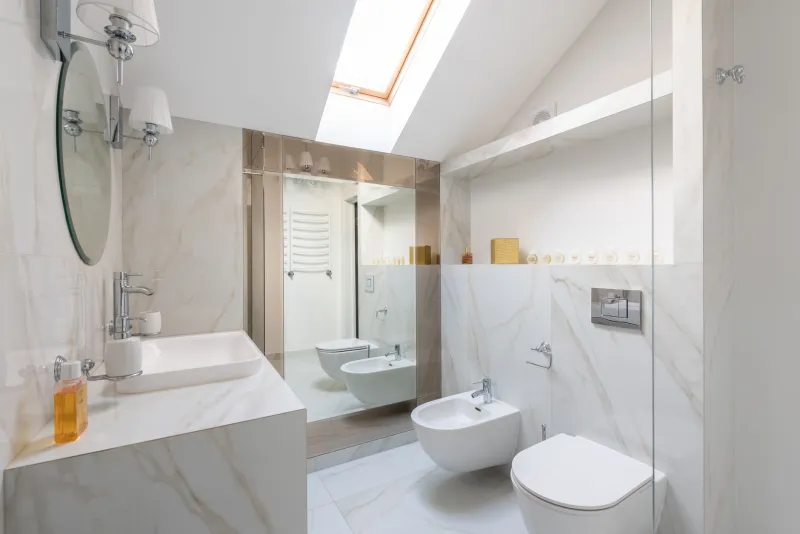
Open the mirrored cabinet in almost any American bathroom and you'll find the same strange collection: a half-used tube of something, some expired cough medicine, a few mystery pills rattling around without a bottle, maybe a razor that should have been replaced months ago. It's personal. It's a little embarrassing. And it's completely hidden from view the moment you close that mirrored door.
That's not an accident. The medicine cabinet was designed from the beginning to conceal. The question is: what, exactly, were people trying to hide — and why are we still doing it a hundred years later?
The Bathroom Wasn't Always a Private Room
The modern American bathroom as a dedicated, private, fully-plumbed room is largely a 20th-century creation. Before indoor plumbing became standard in urban homes — and it didn't become truly widespread until the 1920s and 1930s — bathing and personal hygiene were handled in ways that varied enormously by class, region, and access to water.
When the private bathroom did arrive in American middle-class homes, it arrived with a set of cultural anxieties attached. This was a room where the body was maintained, where illness was managed, where the messy reality of being a physical person played out. And the Progressive Era and early 20th century were deeply preoccupied with presenting a clean, controlled, modern image of domestic life.
Pharmaceutical companies were also in the middle of a massive expansion during this period. The early 1900s saw the rise of branded patent medicines, personal care products, and a growing array of health items that were being marketed directly to American consumers for the first time. Listerine launched its famous bad breath campaign in 1921. Kotex introduced the first mass-marketed feminine hygiene product around the same time. Aspirin had become a household staple. Americans were buying more personal health products than ever before.
And they had nowhere to put them.
The Cabinet That Solved an Embarrassment Problem
The recessed mirrored medicine cabinet emerged as a design solution in the 1920s, and it solved two problems simultaneously.
The first was practical: bathrooms in newly built homes were small, and there wasn't much surface space. A cabinet built into the wall behind the mirror used dead space between wall studs without eating into the room.
The second problem was social. The new wave of personal health and hygiene products being marketed to American consumers came loaded with embarrassment. Feminine hygiene products, treatments for skin conditions, digestive remedies, personal grooming items — these were things people needed but didn't particularly want guests to see displayed on a shelf. The medicine cabinet offered a discreet solution. Everything went behind the mirror. Guests saw a clean reflective surface. The reality of maintaining a human body stayed hidden.
Builders and architects quickly standardized the recessed mirrored cabinet as a bathroom fixture, and by the mid-20th century it had become so common in American home construction that it was essentially invisible — just a thing that bathrooms had, the way they had faucets and towel bars.
How It Shaped the American Bathroom
The medicine cabinet's influence on bathroom design extended well beyond the cabinet itself. It established a visual logic for the American bathroom: surfaces should appear clean and uncluttered. The mess of daily life — the products, the medications, the evidence of actual human maintenance — should be stored out of sight.
This principle got baked into how Americans think about bathroom design more broadly. The proliferation of bathroom storage products — under-sink organizers, shower caddies, linen closets positioned near bathrooms — all reflects the same underlying impulse. The bathroom should present a composed face while doing its actual work behind closed doors.
Interior designers have noted for decades that the medicine cabinet remains one of the most psychologically loaded spaces in any home. It's where people look when they're a guest and curiosity gets the better of them. The cabinet's contents are considered intimate in a way that, say, a kitchen pantry is not. Opening someone's medicine cabinet uninvited is a recognized social transgression. There's even a long-running cultural joke about guests doing exactly that.
All of that social weight traces back to the original design intention: this is where you hide what you don't want seen.
We Live Alone and We Still Hide
Here's the part of this story that gets genuinely interesting. The medicine cabinet was designed to manage social presentation — to keep personal health items out of sight when visitors came through. That logic made complete sense in a 1920s household where the bathroom was a shared space and maintaining appearances was a genuine social priority.
But plenty of Americans who live alone still use medicine cabinets the same way. The toiletries go behind the mirror. The countertop stays clear. The products get hidden even when there's nobody to hide them from.
This is what happens when a design solution becomes a design norm. The cabinet taught Americans that the bathroom countertop should be empty and that personal care items belong out of sight. That lesson outlasted the specific social anxiety that produced it. People internalized the aesthetic — the idea that a clean, uncluttered bathroom surface is simply what a proper bathroom looks like — without retaining any conscious awareness of where that standard came from.
The medicine cabinet is a small architectural decision from a hundred years ago that quietly shaped how Americans feel about their own bathrooms. Every time you close that mirrored door on a shelf of things that are perfectly ordinary and nothing to be embarrassed about, you're participating in a tradition of concealment that started with someone, somewhere, not wanting their Listerine on display.
The door closes. The mirror reflects. And the little private world behind it stays exactly where it was always meant to be.