Nobody Planned for Rice at Weddings — A Depression-Era Shortage Did
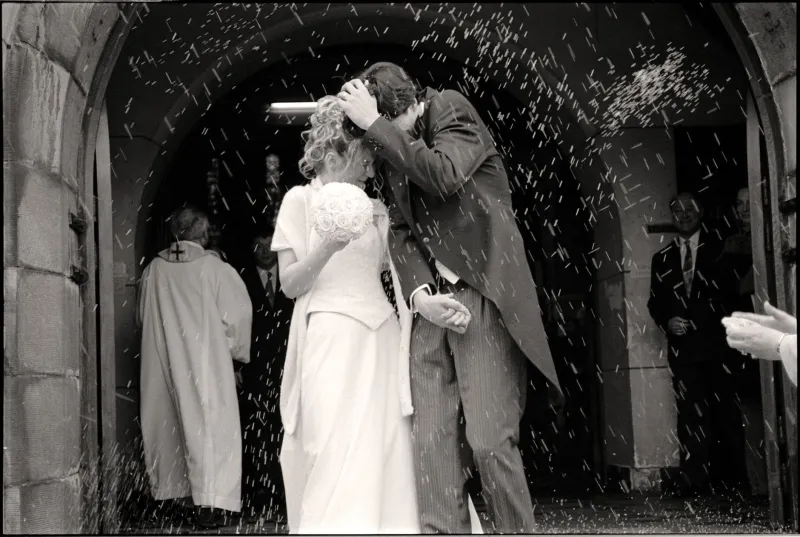
Ask anyone why rice gets thrown at weddings and you'll likely hear something about fertility, prosperity, or ancient Roman customs. It sounds plausible. It sounds old. And like a lot of things that sound old, it's mostly a story we told ourselves after the fact to make a practical habit feel meaningful.
The truth is messier, more recent, and honestly more interesting.
The Ritual Everyone Assumes Is Ancient
There is a long history of tossing symbolic things at newlyweds. Ancient Romans threw wheat. Medieval Europeans occasionally scattered nuts or dried fruits. The general idea — shower the couple with something representing abundance — shows up across many cultures. So the concept has roots.
But rice specifically, at American weddings specifically, as a widespread everyday custom? That's a much newer story. And it has less to do with symbolism than with what was sitting in the pantry during one of the hardest economic stretches in American history.
When Confetti Got Expensive
Through the late 1800s and into the early 20th century, celebratory sendoffs at weddings involved whatever was cheap and available — flower petals, paper scraps, sometimes actual grain. Confetti was popular in wealthier circles, but it wasn't cheap to produce in large quantities. For working-class families throwing weddings on thin margins, you used what you had.
Then the 1930s arrived and budgets got a lot thinner.
During the Depression, American households were finding creative ways to stretch every resource. Rice was already a staple — affordable, shelf-stable, and purchased in bulk. It was also, critically, something you could spare a small handful of without feeling like you were wasting a meal. Flower petals required a garden or a florist. Paper confetti cost money. Rice was just there.
Families hosting weddings on Depression-era budgets quietly defaulted to rice as the sendoff material of choice. It wasn't a decision anyone announced. It wasn't a trend piece in a magazine. It was just the practical move, repeated enough times across enough communities that it started to feel normal.
How Necessity Became Ritual
Here's where it gets interesting. Once the Depression eased and household budgets recovered, the rice toss didn't disappear. It stuck around — and not because people were still pinching pennies.
By the late 1940s, the rice toss had been repeated at enough weddings that it started to feel traditional. And once something feels traditional, people stop asking why they do it. They just do it. Etiquette columns in women's magazines began referencing it as a standard part of wedding ceremonies. Bridal guides included it in their checklists. It was no longer a budget workaround — it was the thing you did.
This is how a lot of cultural traditions actually form. Not through deliberate design or ancient wisdom, but through repetition during a specific moment in time, followed by the slow process of that repetition getting mistaken for heritage.
The Fertility Story Gets Invented Later
Once rice became a fixture, people naturally started asking what it meant. And because rice does appear in some historical fertility symbolism in other cultures, it was easy to backfill an explanation. Writers and commentators connected the dots — or invented the dots — and suddenly the Depression-era budget hack had a mythology attached to it.
By the 1960s and 70s, the fertility and prosperity explanation was so widely repeated that most Americans believed it was the origin story. It wasn't. It was a post-hoc rationalization that made the tradition feel older and more intentional than it actually was.
This kind of narrative retrofit happens constantly with cultural customs. We're uncomfortable with the idea that something meaningful started as a coincidence or a cost-cutting measure, so we reach for a better story.
The Bird Myth That Almost Killed It
If you grew up in the 1990s, you probably heard a different story: that throwing rice was being banned at weddings because birds would eat the uncooked grains, the rice would expand in their stomachs, and they would die. It spread through school cafeterias and neighborhood gossip like a genuine public health warning.
Ornithologists and wildlife biologists have repeatedly debunked this. Birds eat uncooked rice constantly — it's a natural food source. The claim was never backed by any actual evidence. But the rumor was persistent enough that some venues did start discouraging rice, which helped push the shift toward birdseed, flower petals, and eventually the biodegradable confetti options that dominate today.
The irony: a completely false story nearly ended a tradition that had already survived on the strength of a completely invented meaning.
What It Tells Us About How Traditions Work
The rice toss is a useful case study in how cultural habits actually form and persist. The origin wasn't symbolic. It wasn't planned. It was a Depression-era household making the most of what was available, repeated often enough to feel intentional, then dressed up in borrowed mythology to justify its continued existence.
That's not a criticism of the tradition. There's something genuinely charming about a wedding sendoff that traces back to ordinary families doing their best during a hard decade. The fact that it became meaningful — even if the meaning was assigned after the fact — says something real about how communities create shared rituals out of shared circumstances.
Next time you're standing outside a venue with a handful of rice, know that you're not re-enacting an ancient Roman ceremony. You're participating in a habit that started because somebody's grandmother had a full pantry and an empty wallet — and that's actually a better story.