The Postcard Was a Marketing Gimmick — So Why Do We Still Feel Guilty for Not Sending One?
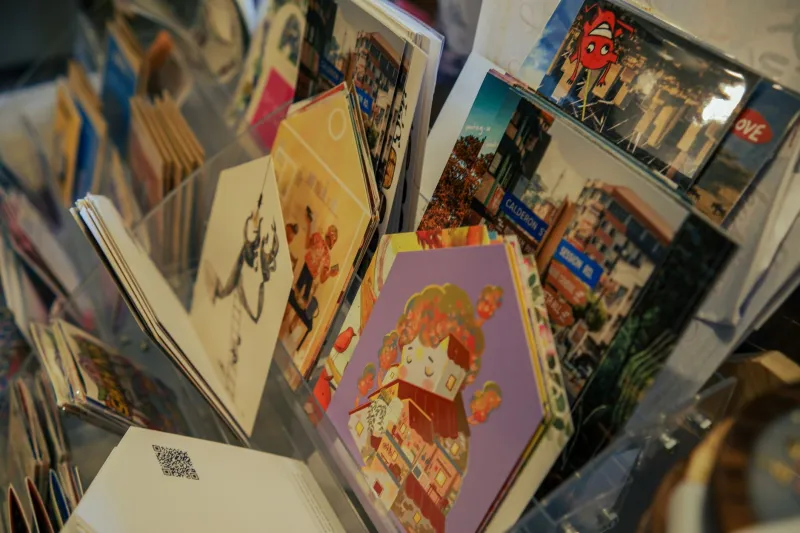
There's a specific guilt that kicks in somewhere around the third day of a vacation. You've seen the rack of postcards near the hotel gift shop. You've walked past it twice. And now there's a small voice in the back of your head reminding you that your aunt in Ohio would really appreciate one.
Where did that voice come from? Because it didn't come from you. It was put there — deliberately, systematically, and over several decades — by a collection of industries that had a lot to gain from making you feel socially obligated to drop a card in the mail.
Before the Postcard, There Was Just... Nothing
For most of American history, travel didn't come with a communication ritual attached to it. If you went somewhere and wanted to tell someone about it, you wrote a letter when you got back. The idea of sending a quick note while you were traveling — from the place itself — wasn't really a cultural expectation. It was logistically complicated, expensive, and honestly, most people didn't travel far enough to make it feel noteworthy.
That started changing in the 1870s and 1880s, when railroad expansion made long-distance travel accessible to a much wider slice of the American population. Suddenly, ordinary middle-class families were visiting cities and landmarks they'd only read about. And they wanted proof. They wanted to share it. They just didn't have a convenient way to do it.
The Postal Service Spots an Opportunity
The U.S. government authorized private postcards for mailing in 1898, dropping the postage rate to a penny. That single pricing decision was more culturally significant than it might appear. A penny was low enough that sending a postcard felt essentially free — an impulse purchase rather than a considered expense.
The timing aligned perfectly with the peak of railroad tourism. Americans were traveling more than ever, arriving in cities and resort towns that had gift shops and souvenir stands positioned right at the station exits. Postcard racks appeared almost immediately, stocked with illustrated images of local landmarks, scenic views, and famous buildings.
The postal service ran campaigns emphasizing how easy it was to stay connected while on the road. The implicit message: if you're somewhere worth being, you should tell someone. The postcard was the mechanism. The penny stamp was the removal of any excuse not to.
Hotels Figured Out the Psychology First
The real acceleration came from an unexpected direction: the hospitality industry.
In the early 1900s, a number of major hotel chains began doing something that seems obvious in retrospect but was genuinely novel at the time. They started printing their own postcards — featuring the hotel exterior, the lobby, the dining room — and leaving them in guest rooms for free. Some went further and provided pre-stamped cards, removing even the minor friction of finding a stamp.
The hotels weren't being generous. They were being smart. Every postcard a guest sent home was a piece of free advertising that reached a specific person who trusted the sender. It arrived in someone's mailbox with a personal endorsement built right in. The hotel name was printed on the front. The message on the back was essentially a testimonial.
But here's the part that matters for how this became a social obligation rather than just a marketing tactic: guests who received postcards started expecting to receive them. The habit spread. If your friend stayed somewhere interesting and didn't send a card, it started to feel like a small slight. A missed gesture. The expectation had been quietly installed.
The Golden Age and What It Cemented
The period between roughly 1905 and 1915 is called the Golden Age of Postcards by collectors and historians, and the numbers bear that out. Americans were mailing postcards at a staggering rate — estimates suggest over a billion cards were sent in the U.S. in 1913 alone. It was a genuine cultural phenomenon.
What that volume did was normalize the behavior across an entire generation. Children grew up in households where postcards arrived from traveling relatives. They grew up understanding, without being told explicitly, that when you go somewhere, you send a card. By the time those children were adults taking their own trips, the behavior was instinctive. It didn't feel like something industries had engineered. It felt like something families did.
The Cheaper Alternatives That Didn't Kill It
Long-distance phone calls got cheaper. Then email arrived. Then texting. Then Instagram made it possible to share a photo of every meal in real time. By every logical measure, the postcard should have become obsolete by the early 2000s.
And yet the guilt persisted. The rack near the hotel gift shop still moved inventory. Vacation towns still had postcard stands on every corner. Because the obligation wasn't really about communication — it was about the gesture. A postcard says: I was somewhere, I thought of you, I did the small physical act of writing your address and dropping this in a box. That gesture doesn't have a digital equivalent, and people sense that.
The railroad companies and postal campaigns and hotel marketing departments didn't just sell a product. They installed a value — that being away from someone creates a small social debt, and the postcard is how you pay it.
The Habit That Outlasted Its Inventors
What's remarkable about the postcard tradition is how thoroughly it detached from its commercial origins. The industries that manufactured the obligation are largely gone or transformed beyond recognition. The penny stamp is long gone. And yet the behavior survives, passed down through families as a kind of inherited courtesy.
That's the real legacy of what happened between the 1890s and the 1920s. A collection of businesses made a calculated bet that if they could make a habit feel personal and thoughtful, people would keep doing it long after the commercial incentive disappeared. They were right. And somewhere in Ohio, your aunt is still waiting.