Why Americans Are Obsessed With Garage Sales — And How World War II Started It All
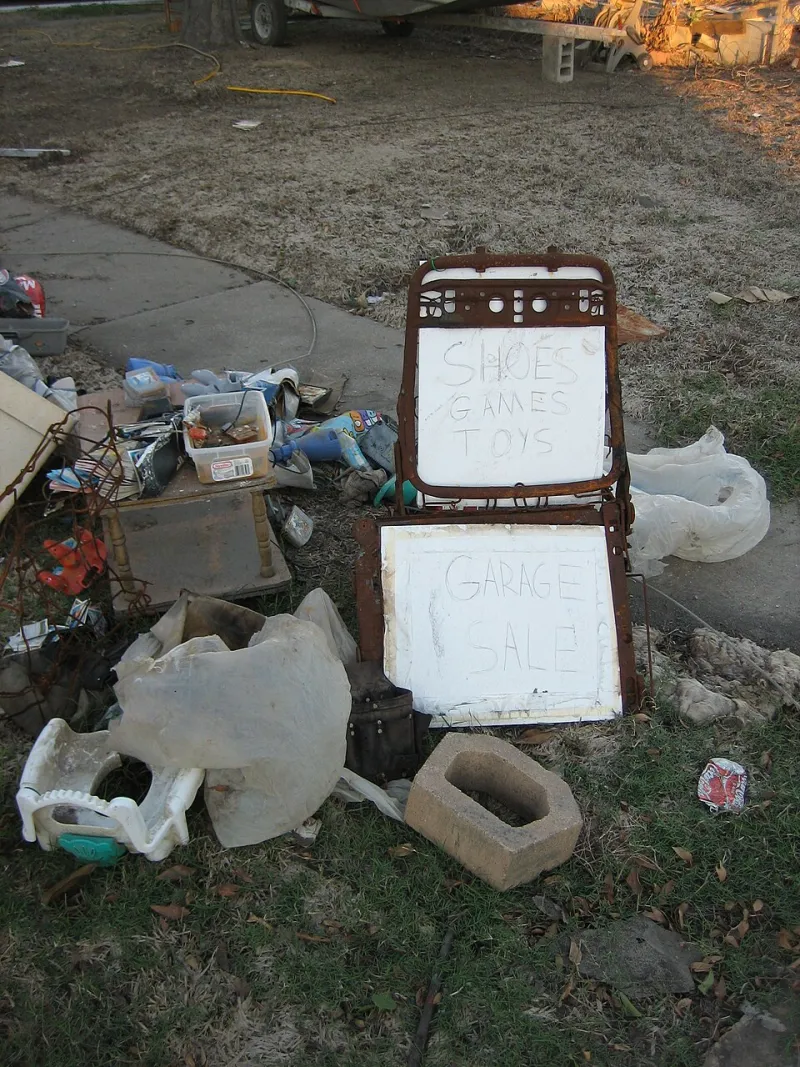
Photo: Infrogmation, CC BY 2.5, via Wikimedia Commons
Every weekend across America, millions of people wake up early, tape handwritten cardboard signs to telephone poles, drag furniture onto their driveways, and spend the morning haggling over coffee mugs and old lamps with complete strangers. It is one of the most distinctly American rituals imaginable — casual, neighborly, and slightly chaotic.
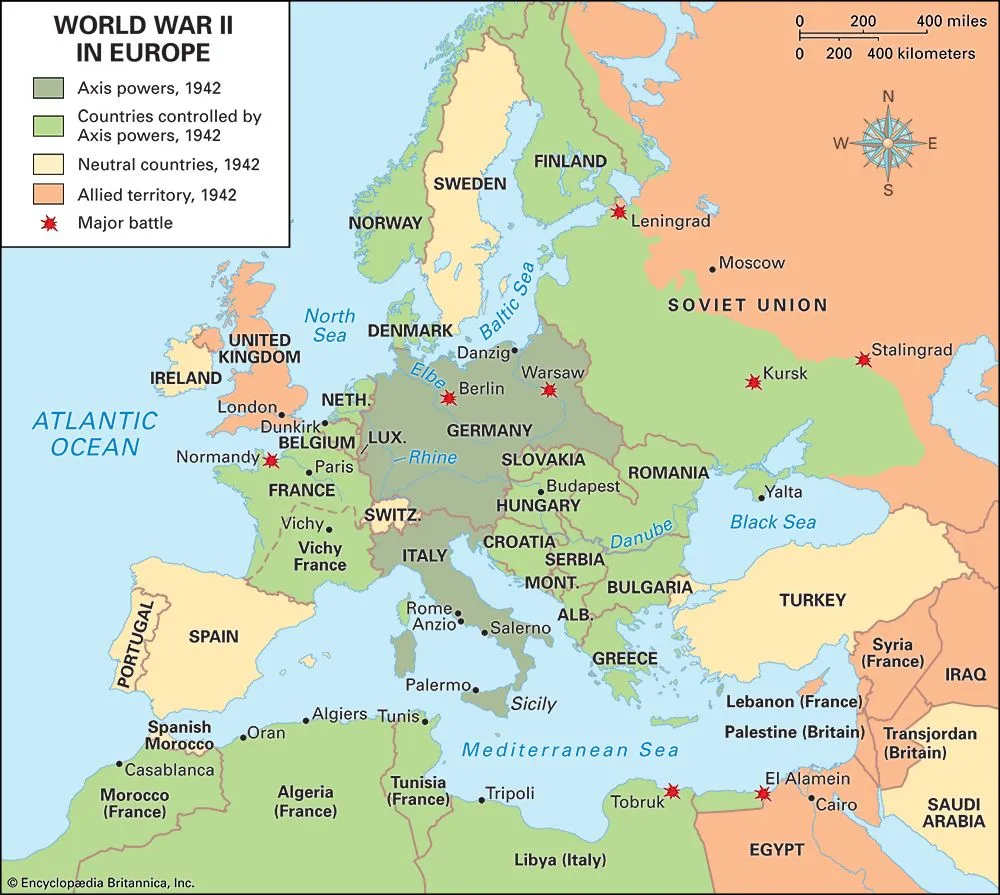 Photo: World War II, via cdn.britannica.com
But here's the thing about garage sales: they didn't emerge naturally from some deep-seated human desire to declutter. They were, in a very real sense, taught to Americans during wartime. And the lesson stuck in ways nobody planned.
When the Government Needed Your Junk
When the United States entered World War II in December 1941, the military's demand for raw materials was immediate and enormous. Steel, aluminum, copper, and rubber were all critical for producing weapons, vehicles, and equipment. The problem was that civilian manufacturing had consumed enormous quantities of these materials throughout the 1930s, and the supply chains needed time to pivot.
The federal government's solution was to go directly to American households. Through the War Production Board and a network of local civilian organizations, the government launched a series of collection drives asking citizens to donate scrap metal, cooking grease, paper, and — critically — rubber.
 Photo: War Production Board, via i.ytimg.com
Rubber was perhaps the most urgent shortage of all. Japan's military expansion through Southeast Asia had cut off access to over 90 percent of America's natural rubber supply virtually overnight. Tires, gaskets, boots, and dozens of other military necessities required rubber, and the synthetic rubber industry wasn't yet capable of filling the gap. The government asked Americans to hand over garden hoses, rubber boots, floor mats, and anything else made from the material.
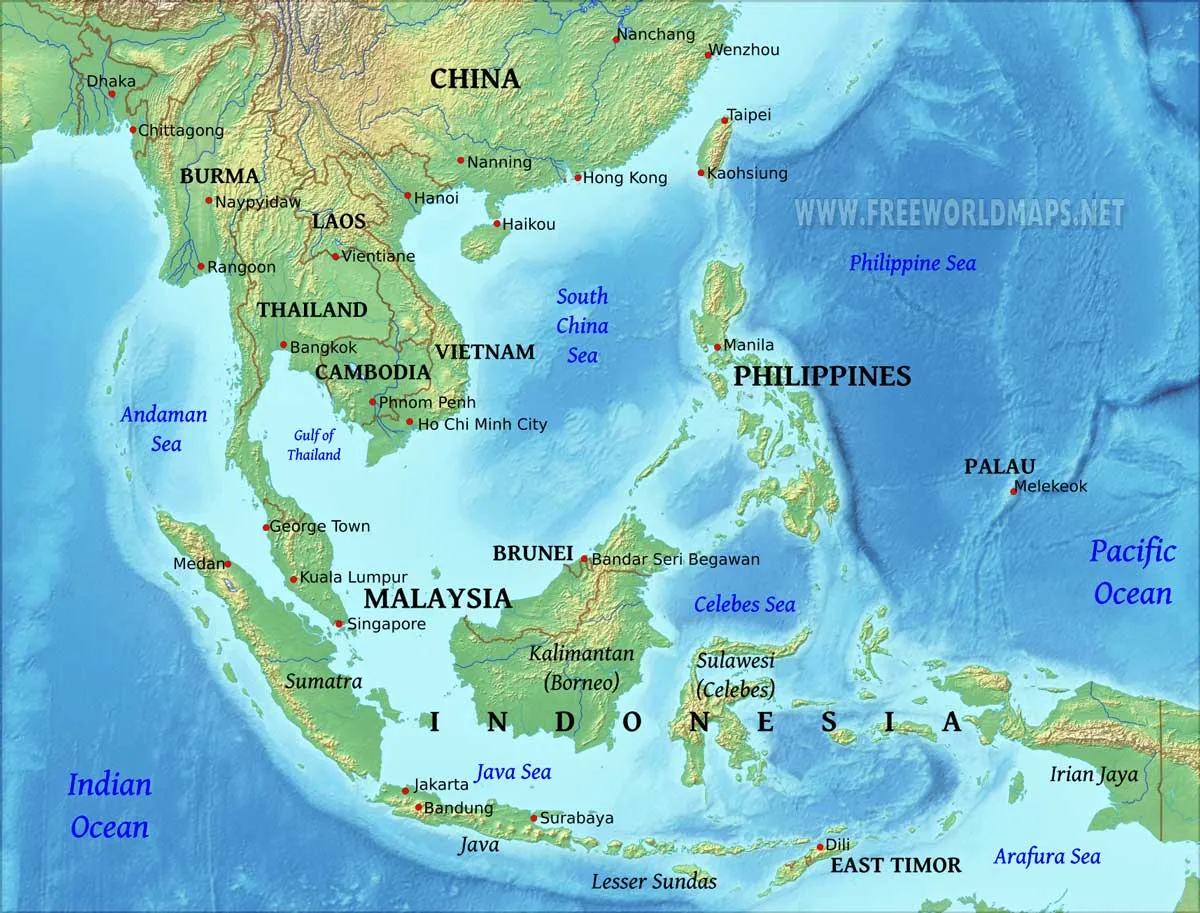 Photo: Southeast Asia, via www.freeworldmaps.net
What happened next was remarkable. Neighborhoods organized collection points. Schools held drives. Churches set up donation stations. And for the first time on a mass scale, Americans became comfortable with the idea of goods moving between households — with neighbors evaluating each other's castoffs and deciding what had value.
The Neighborhood as a Marketplace
The war drives did something subtle but significant: they normalized the assessment of secondhand goods. When your neighbor donated their old rubber welcome mat, it had to be evaluated, sorted, and sometimes traded or redistributed. Communities developed informal systems for managing these exchanges, and in doing so, they quietly dismantled a cultural reluctance to deal in used items.
Before World War II, buying or selling secondhand goods carried a certain stigma in American middle-class culture. It implied financial hardship. Respectable families bought new things. The war changed that framing entirely. Donating and exchanging used goods became an act of patriotism, not poverty. The psychological barrier that had kept secondhand commerce on the margins of American life began to erode.
When the war ended in 1945 and millions of veterans returned home to start families in new suburban developments, they carried that recalibrated relationship with household goods with them. Suburbs themselves created new conditions for the garage sale to flourish: private driveways, detached garages, and a culture of neighborly interaction made it easy and socially acceptable to set up an impromptu outdoor market.
The Postwar Ritual Takes Shape
Through the late 1940s and 1950s, the modern garage sale began to solidify as a recognizable American institution. The format was simple and required almost no infrastructure: pick a Saturday morning, pull your unwanted items into the driveway, price them with masking tape, and wait. The suburban boom provided both the inventory — families accumulating more possessions than ever before — and the audience, as neighbors within walking or driving distance became a natural customer base.
By the 1960s, classified newspaper ads were routinely listing garage sales and yard sales across American cities. Entire communities began treating the weekend circuit of sales as a leisure activity in its own right. Dedicated buyers would map out routes through neighborhoods, hunting for furniture, records, books, and tools. The ritual had its own vocabulary, its own unwritten etiquette, and its own subculture.
Flea markets, which had existed in various forms for decades, expanded rapidly during this period as well, providing a more organized version of the same exchange. Thrift stores like Goodwill and the Salvation Army, which had operated since the early twentieth century, saw their cultural standing rise alongside the growing acceptance of secondhand commerce.
The Numbers Behind the Driveways
Today, economists who study informal markets estimate that garage sales and yard sales generate somewhere between $4 billion and $6 billion in transactions annually in the United States — though by their nature, these exchanges are difficult to track precisely. That figure doesn't include the broader resale economy that grew directly from the same cultural roots: thrift stores, consignment shops, estate sales, and the digital platforms that have taken the garage sale concept online.
Apps and websites like eBay, Craigslist, Facebook Marketplace, and Poshmark are, in many ways, the direct descendants of the wartime neighborhood collection drive. They operate on the same fundamental premise: one person's unwanted item has value to someone else, and the transaction between them is legitimate and even virtuous.
The garage sale didn't just survive into the digital age — it scaled. What started as a wartime coping mechanism became a postwar suburban ritual, then a multibillion-dollar informal economy, and eventually an entire sector of modern commerce.
All because the government once needed your old rubber boots.