The Traffic Rule 230 Million Americans Follow Every Day Was Actually a Political Statement
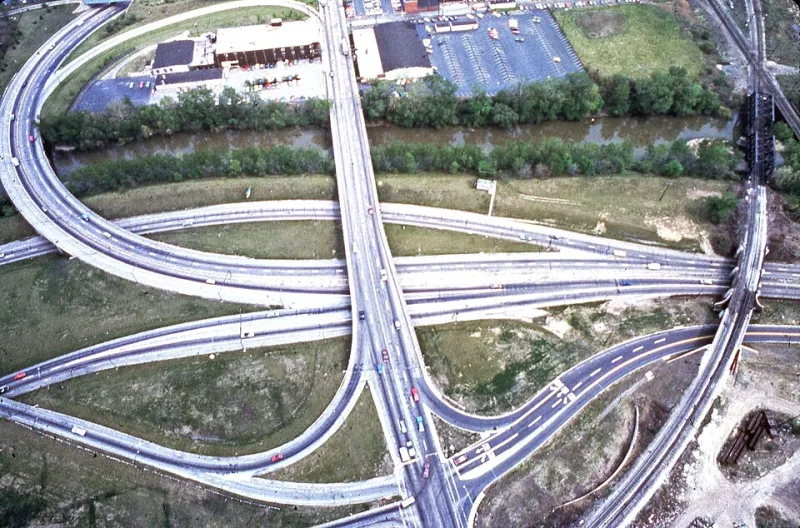
Photo: David E. Lucas, Public domain, via Wikimedia Commons
You don't think about which side of the road you drive on. Nobody does. You just do it, automatically, the same way you breathe or blink. But the rule itself — that American drivers keep to the right — didn't emerge from logic or safety research or traffic engineering. It came from a surprisingly tangled chain of political decisions, colonial-era customs, and one European military commander whose road preferences rippled across an ocean and into the asphalt of every interstate in the country.
Trace it back far enough, and the lane you're driving in right now is a fossil of a centuries-old argument about power, identity, and who exactly Americans wanted to be.
The Old World Was Split Right Down the Middle
For most of recorded history, there was no universal rule about which side of the road travelers should use. Usage varied by region, by terrain, by local custom, and sometimes by the width of the road itself. In medieval Europe, mounted knights generally passed on the left — keeping their sword arm toward a potential opponent — which meant keeping to the left became the default in many parts of the continent. England formalized left-hand traffic in the late 18th century, and the British Empire carried that convention around the world.
But in France, something different was happening.
Pre-revolutionary French aristocrats traveled on the left side of the road, forcing peasants to scramble to the right to get out of the way. When the Revolution arrived in 1789, that spatial arrangement became politically charged overnight. Revolutionary leaders began insisting on traveling on the right — the side where the common people walked — as a deliberate act of egalitarian symbolism. Keeping right wasn't just a traffic preference. It was a statement about who you were.
Napoleon Bonaparte, who understood the propaganda value of symbolism as well as anyone in history, codified this into military and civil road law as he marched his armies across Europe. Wherever French forces went — the Netherlands, Spain, northern Italy, the German states — right-hand traffic followed. The countries that resisted French domination, most notably Britain, kept the left.
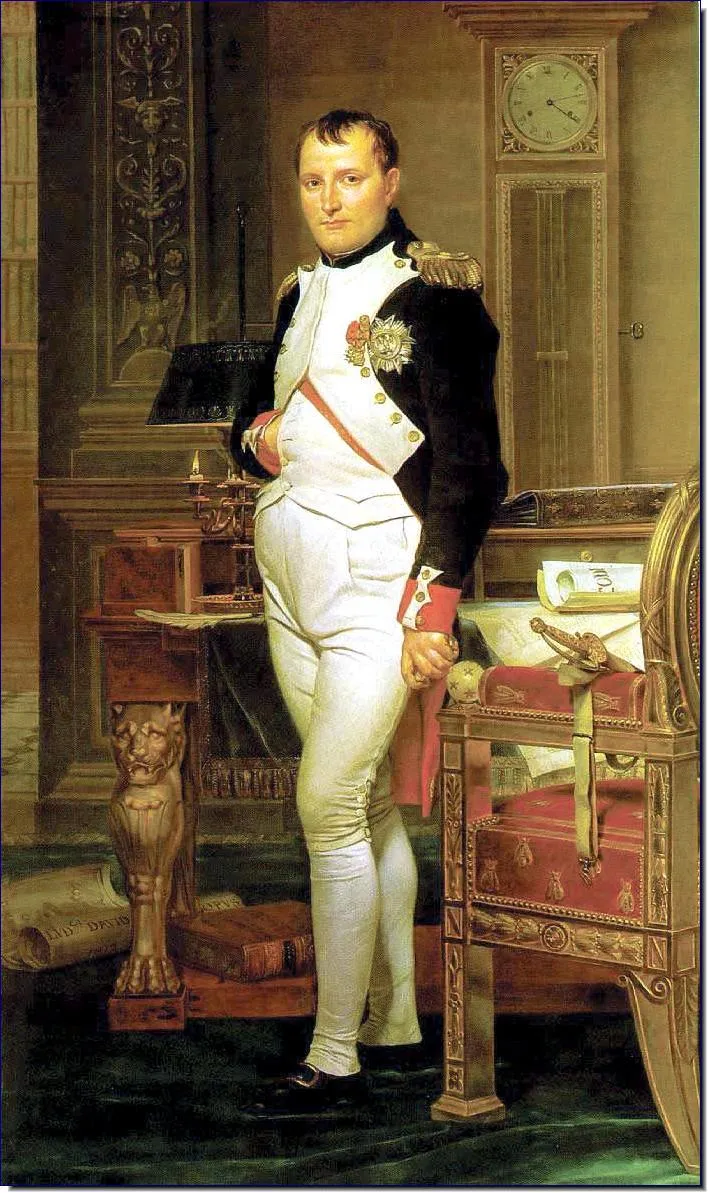 Photo: Napoleon Bonaparte, via 1.bp.blogspot.com
Europe was effectively divided by road direction along the same lines it was divided by politics. And those divisions have largely persisted to this day.
Pennsylvania Made the Call Before Anyone Was Paying Attention
Across the Atlantic, the American colonies were sorting out their own road customs without any central authority telling them what to do. In the early 1700s, the dominant form of freight transport in Pennsylvania and New York was the Conestoga wagon — a massive, heavy vehicle pulled by teams of four or six horses. The driver didn't sit in a box seat like a European coachman. He either walked alongside the team or sat on the left rear horse, controlling the animals with a whip held in his right hand.
This seating position had a direct consequence: the driver naturally kept to the right side of the road, so he could see oncoming wagons clearly and avoid collisions. If he'd kept to the left, his view of the road ahead would have been partially blocked by his own team. The geometry of the Conestoga wagon, in other words, made right-hand traffic the path of least resistance on American roads.
Pennsylvania passed the first American law mandating right-hand traffic in 1792, covering the Lancaster Turnpike — one of the country's first paved roads. The rule spread organically from there, state by state, driven more by the practical habits of freight drivers than by any legislative philosophy.
But the philosophical dimension was never entirely absent.
Rejecting Britain, One Road at a Time
After the Revolution, keeping to the right carried a cultural charge in America that went beyond wagon logistics. Britain drove on the left. America drove on the right. That contrast wasn't accidental, and it wasn't lost on the people living through it. The new republic was actively constructing a national identity distinct from its colonial parent in every domain it could — currency, spelling, legal systems, and yes, road conventions.
Noah Webster, who was busy Americanizing the English language in the same era, would have appreciated the instinct. The young United States was hungry for markers of independence, and the direction of traffic on its roads was one of the quietest but most pervasive ways that independence was expressed physically in the landscape.
When Canada and Australia — both still firmly within the British orbit — kept left, and when the United States kept right, the division of the road became a map of political allegiance rendered in daily habit.
The Federal Highway Act Sealed the Deal
For most of the 19th and early 20th centuries, road rules in America remained a patchwork of state and local regulations. The rise of the automobile made that patchwork dangerous. Drivers crossing state lines encountered different signage, different conventions, and — in a few holdout areas — different sides of the road.
The Federal Aid Highway Act of 1916, and its more expansive successor in 1956 that created the Interstate Highway System, imposed a uniform national framework on American roads for the first time. Right-hand traffic wasn't up for debate by then — it had been the de facto standard for over a century. The federal legislation simply formalized what wagon drivers in Pennsylvania had started figuring out in the 1700s.
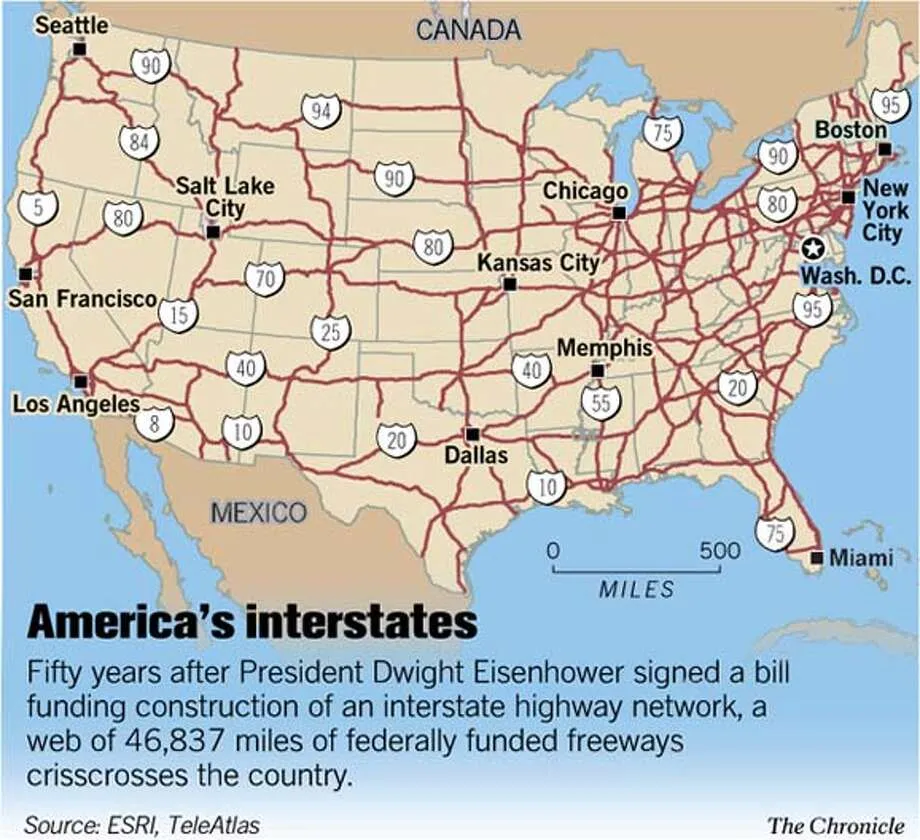 Photo: Interstate Highway System, via s.hdnux.com
The last American jurisdiction to switch from left to right was the territory of the Virgin Islands, which made the change in 1971. The conversion required months of public education campaigns and cost millions of dollars. It was, by any measure, a massive logistical undertaking — all to align a small island with a traffic convention that the rest of the country had drifted into almost by accident.
The Lane You're In Right Now
So the next time you're sitting at a red light, waiting to turn, consider what you're actually inside. You're in a lane that exists because Conestoga wagon drivers in 18th-century Pennsylvania needed to see oncoming traffic. You're on a side of the road that French revolutionaries chose to distinguish themselves from aristocrats. You're following a convention that Americans quietly adopted, in part, because it was the opposite of what the British did.
The infrastructure of everyday life is rarely neutral. Roads, rules, and the directions we travel are shaped by history in ways that become invisible the moment they become routine.
You were never just driving. You were following a political argument that's been settled for so long that nobody remembers it was ever an argument at all.