The Lab Accident That Keeps Wedding Rings From Turning Your Finger Green
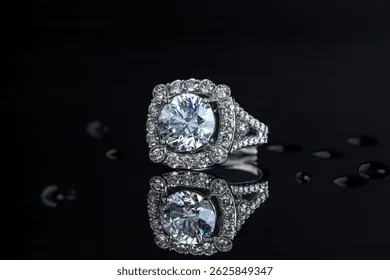
Photo: white gold engagement ring closeup jeweler workshop, via www.shutterstock.com
Walk into any American jewelry store and you'll see them side by side: the classic yellow gold band and its pale, silvery competitor. White gold feels like it's always been there — a natural alternative, an obvious choice.
It wasn't obvious. It wasn't even safe, at first. The metal on your left hand is the survivor of a chemistry accident, an industrial disaster, and a dentist's stubborn hunch.
The Chemist Who Made Metal Behave Badly
Our story starts with Karl Welsbach, an Austrian chemist working in the 1890s who was experimenting with alloys — metals blended together to create new properties. One of his creations contained nickel, and it produced a bright, silvery-white finish that looked remarkably like platinum, a metal so rare it was then almost priceless.
There was a catch, and it was a serious one. Nickel alloys can be viciously allergenic. Workers handling the raw material developed rashes, sores, and skin reactions so severe that early white gold earned a grim reputation in the trade. Some accounts from the era describe the metal being handled with genuine dread by the craftspeople who shaped it.
The jewelry industry wanted the look. Nobody wanted the liability.
The Disaster That Forced a Rethink
The nickel problem wasn't just a workshop nuisance — it eventually collided with one of the darkest chapters of the 20th century. During World War I and the decades after, nickel alloys found their way into military and industrial applications, and occupational exposure to nickel compounds became linked to serious illness among workers in refineries and plating facilities across Europe and America.
The jewelry trade, watching from the sidelines, got the message. If white gold was going to sit against human skin for a lifetime — through weddings, births, and decades of daily wear — it needed to be reformulated from the ground up.
By the 1930s, jewelers began swapping out much of the nickel for palladium, a platinum-family metal that produced the same bright finish without the skin reactions. The alloy was no longer a hazard. It was finally ready for the display case.
A Dentist's Bright Idea
Now for the twist that lands this story on American ring fingers. In the 1940s, as white gold became commercially viable, a Philadelphia dentist named Frederick — working with platinum alternatives for dental work — helped popularize the idea that the bright, durable alloy could serve beautifully in fine jewelry.
The timing was uncanny. During World War II, the U.S. government declared platinum a strategic metal, reserved for the war effort. Engagement ring makers, suddenly cut off from their preferred material, needed a substitute that looked just as bright and wore just as well. White gold stepped into the vacancy almost overnight.
The De Beers marketing machine — already deep into its legendary campaign convincing Americans that a diamond engagement ring was a romantic obligation — found a perfect partner. A white gold setting made the diamond the undisputed star of the ring, a bright frame around the stone. Sales of white gold settings climbed through the postwar boom and never really came down.
The Rivalry on Your Ring Finger
Today, white gold and platinum share the market in a rivalry that plays out in every jewelry store in the country. White gold is typically rhodium-plated to achieve its mirror finish — a coating that wears off over years and needs reapplication, a small maintenance ritual many wearers don't know they signed up for.
And the allergy story hasn't fully ended. Nickel-free formulations are now standard in quality jewelry, but dermatologists still occasionally trace mysterious rashes back to cheaper alloys. The ghost of Welsbach's original mix lingers in the fine print.
There's something fitting about the whole arc. A material invented by accident, feared by the people who made it, rescued by wartime necessity and a dentist's side project — now one of the most intimate objects Americans ever own. The next time you see a white gold band catch the light, remember: it's not just a pretty metal. It's a survivor.