When Washington Told Americans to Dig Up Their Lawns — And They Did
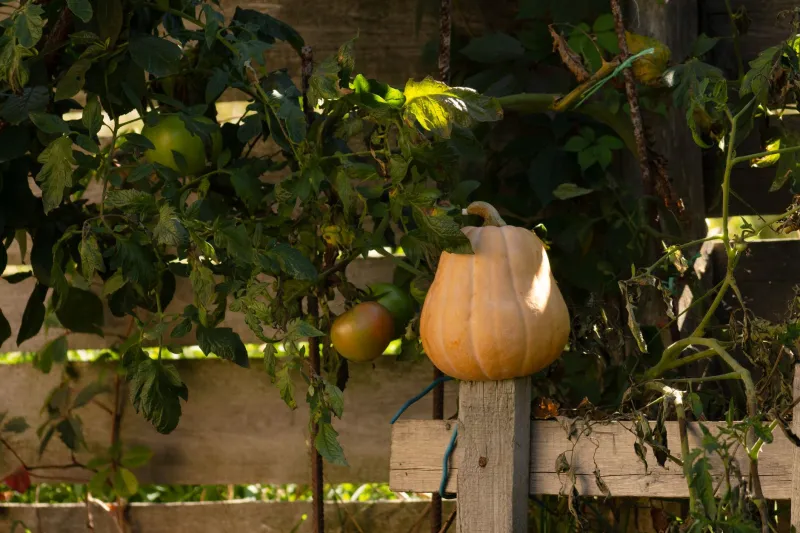
Somewhere in America right now, someone is pulling up a patch of grass to plant tomatoes. They're probably calling it a raised bed garden, posting updates on Instagram, and thinking of it as a personal lifestyle choice. They're not wrong — but they're also, without knowing it, repeating a gesture that the United States government engineered as a wartime propaganda campaign more than eighty years ago.
 Photo: United States, via as2.ftcdn.net
The Victory Garden movement is one of the more remarkable case studies in how a government message, delivered urgently enough, can reshape a culture permanently — long after the urgency has passed.
The Problem Behind the Campaign
By 1942, the American food supply was under serious strain. Shipping capacity was being redirected to military logistics. Canned goods were rationed. Farm labor was scarce because farmhands were enlisting. The federal government faced a genuine supply crisis, and it needed a solution that didn't require building new infrastructure or waiting for the agricultural sector to adapt.
The answer it landed on was to turn the civilian population into a supplementary food production network. Every backyard, vacant lot, rooftop, and community park became a potential growing site. The War Food Administration, working alongside the Department of Agriculture, launched a coordinated campaign to make vegetable gardening feel not just practical but patriotic.
 Photo: Department of Agriculture, via business.inquirer.net
The messaging was deliberate and carefully constructed. Posters framed the garden spade as a weapon. Slogans tied homegrown vegetables to battlefield morale. Government pamphlets walked readers through planting schedules and soil preparation in plain language. The goal wasn't to teach Americans to garden — it was to make not gardening feel like a failure of civic duty.
Forty Percent of the Nation's Vegetables
The response was extraordinary. By 1943, an estimated 20 million Victory Gardens were producing food across the country. Suburban lawns, city window boxes, schoolyards, and factory grounds all got turned over. The combined output was staggering: homegrown plots accounted for roughly 40 percent of the fresh vegetables consumed in the United States that year.
To put that in context, the entire American agricultural industry — commercial farms, distribution networks, grocery supply chains — was responsible for the other 60 percent. A volunteer civilian effort, launched barely a year earlier, was keeping pace with it.
What made this possible wasn't just patriotic enthusiasm, though there was plenty of that. The government had also invested heavily in the supporting infrastructure: seed distribution programs, soil testing services, gardening guides written at a mass-literacy level, and radio broadcasts timed to planting seasons. Washington had essentially designed a national gardening curriculum and delivered it through every available channel.
What the Lawn Learned
Here's where the story gets more complicated — and more interesting.
Before World War II, the American lawn was already developing its postwar identity: a stretch of uniform grass, maintained for appearance, functioning as a kind of social signal. Keeping it tidy meant you were a certain kind of neighbor, a certain kind of citizen. The lawn was decorative real estate.
The Victory Garden campaign inverted that completely. Suddenly, a lawn that was doing something — growing food, contributing to the war effort — was the respectable one. The ornamental grass plot became, briefly, a symbol of passivity at best and selfishness at worst.
When the war ended, the old lawn aesthetic came roaring back, fueled by postwar suburbanization, the rise of the lawn care industry, and a general cultural pivot toward domestic comfort over collective sacrifice. But the inversion had happened. Somewhere in the American relationship with outdoor space, a seed had been planted — metaphorically and literally — that a yard could be productive, not just presentable.
The Long Aftershock
That tension never fully resolved. It just went quiet for a few decades.
The back-to-the-land movement of the 1960s and 70s picked it up again, framing home food production as a counter-cultural act — a rejection of industrial agriculture and corporate food systems. The rhetoric was different from 1943, but the gesture was identical: dig up the grass, plant something edible, make your yard mean something.
The farmers market boom of the 1990s and 2000s extended the logic further. Buying locally grown food became a values statement, a way of opting out of a supply chain that felt opaque and impersonal. The language shifted from patriotism to environmentalism, but the underlying impulse — I want to know where my food comes from, and I want some control over it — was the same one the War Food Administration had activated in 1942.
Today's urban gardening movement, the explosion of community garden programs, the cottage industry around backyard chickens and composting and heirloom seed catalogs — all of it sits in the long shadow of a wartime campaign that most participants have never heard of.
Independence Has a Lot of Definitions
What Victory Gardens reveal, traced back to their source, is something revealing about how Americans define self-sufficiency. The government launched the program as a collective act — millions of individuals contributing to a shared national need. But Americans experienced it, and remember it, as an individual one: my garden, my food, my effort.
That translation — from collective obligation to personal independence — is very American, and it's exactly why the habit outlasted the war. Growing your own food stopped being about rationing and became about something harder to name: a feeling of competence, of connection, of not being entirely dependent on systems you don't control.
The next time you see a raised bed where a lawn used to be, that's what you're looking at. A wartime message that never quite turned off.